Skin Quality & Previous Treatment Concerns
Skin-Quality Consultation & Assessment in Melbourne
Dr Benyamin Mansoori provides doctor-led skin assessment and individually tailored skin-care and management planning in Southbank and Malvern, Melbourne. A skin-quality consultation offers time to discuss pigmentation, texture, hydration, redness, pore appearance, fine lines and other concerns in the context of your skin health.
Genetic factors, ageing, sun exposure, medical and skin conditions, the environment and daily care all influence skin. Different concerns can have different causes, and skin disease needs to be distinguished from aesthetic changes. Assessment does not imply that a procedure is necessary or suitable, and there is no obligation to proceed or guarantee of an outcome.
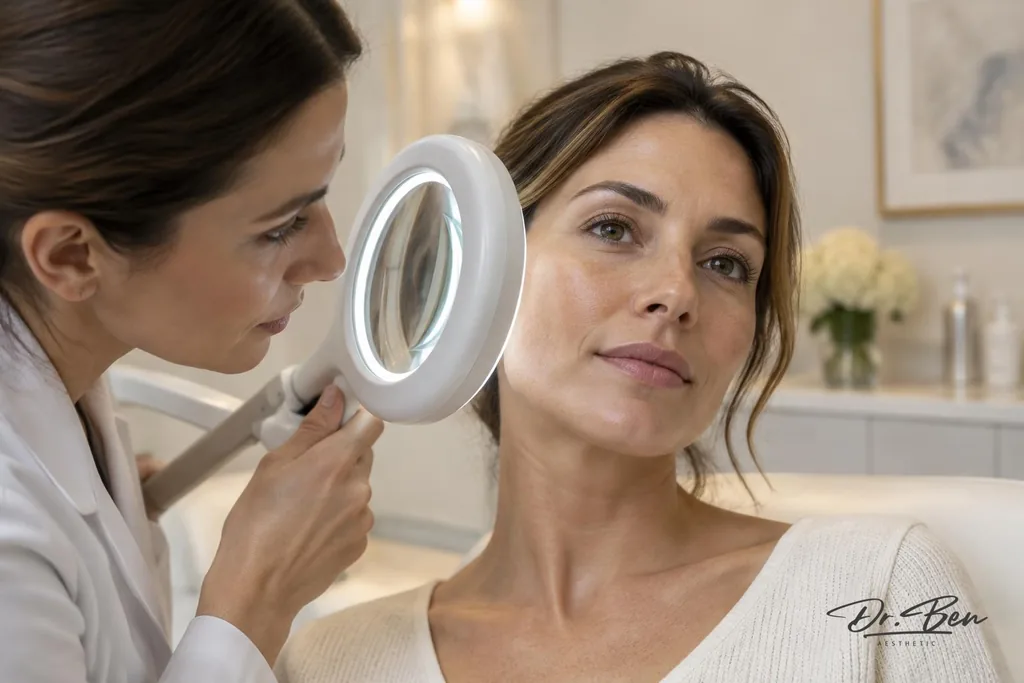
What Is a Skin-Quality Consultation?
A skin-quality consultation is a medical assessment of your skin and the concerns that matter to you. It may consider texture, visible pores, pigmentation, hydration and barrier function, fine lines, sun damage, redness, sensitivity, laxity and acne, together with current skin care and previous treatments.
The aim is to distinguish skin disease from aesthetic concerns and understand what might be contributing to changes. Management may involve a conservative skin-care plan, medical treatment of a skin condition, assessment for a procedure, further investigation, referral or no intervention. A cosmetic consultation and facial assessment may also be useful when skin concerns overlap with wider facial concerns.
Common Skin Concerns Assessed During Consultation
Uneven Skin Texture: Sun exposure, acne, scarring and ageing can affect how smooth skin looks and feels. Examination helps distinguish active inflammation from lasting texture changes; these do not necessarily need the same approach.
Enlarged or Visible Pores: Pores are normal skin structures. Their appearance can be influenced by oil production, genetics and changes in surrounding skin. They cannot be permanently removed, and no treatment can promise pore-free skin.
Skin Hydration and Dryness: Tightness, flaking or dryness may relate to barrier disruption, environmental exposure, irritating products or an underlying skin condition. Gentle cleansing and appropriate moisturising may be more relevant than a cosmetic procedure; persistent symptoms need assessment.
Pigmentation and Uneven Skin Tone: Freckles, melasma, post-inflammatory pigmentation and sun exposure can contribute to uneven colour. Pigmentation and sun damage require an individual assessment, as different causes need different management. New or changing pigmented lesions should be medically assessed rather than assumed to be cosmetic.
Fine Lines and Early Skin Ageing: Facial movement, sun exposure and ageing can contribute to fine lines. Skin texture, dryness and facial anatomy may also affect their appearance. The consultation explores these contributions without promising to eliminate lines or stop ageing.
Skin Redness and Sensitivity: Rosacea, dermatitis and irritation from products can have overlapping features. Stinging, flushing or persistent redness may need medical management before any procedure is considered; an inappropriate intervention could worsen symptoms.
Skin Firmness and Elasticity: Changes in skin support and elasticity may contribute to laxity. Underlying facial anatomy and the degree of skin change matter, and a skin-focused procedure cannot address every structural concern.
Acne-Related Skin Changes: Active acne, residual marks and scars are different concerns that may need separate approaches. Acne-scar assessment can help clarify the type and extent of scarring once active disease and individual risks have been considered.
Sun-Damaged Skin: Long-term sun exposure can cause uneven colour, roughness and other skin changes. Sun protection is important, but a non-healing sore or changing lesion needs medical assessment. Full skin checks may be appropriate depending on the findings and personal risk.
Understanding Your Skin Type and Individual Risk Factors
Your skin tone, sensitivity, barrier function, tendency to develop pigmentation after inflammation and history of healing influence the risks of particular procedures. Previous reactions to products or treatments, sun exposure and relevant medical conditions are also important.
Skin types are not interchangeable, and appearance alone does not predict every risk. Assessment should avoid assumptions or stereotypes and consider your own history. For some people, irritation or post-inflammatory pigmentation makes a conservative approach preferable.
Why Is Medical Assessment Important Before Cosmetic Skin Treatment?
Skin conditions can look similar while having different causes. Redness might reflect rosacea, dermatitis or irritation; uneven colour may have several explanations. Active acne, inflammation or a changing pigmented lesion may need medical care or investigation before a cosmetic procedure is discussed.
Clinical assessment helps identify when further evaluation or referral is appropriate. Cosmetic treatment should not delay diagnosis of a concerning lesion or replace management of an underlying skin condition.
What Happens During Your Skin-Quality Consultation?
The consultation is guided by your priorities and clinical findings. A procedure at the first appointment is not assumed; you can take time to consider the information and decide whether to proceed.
- Concerns and priorities: Discuss the changes you have noticed, symptoms, areas of concern and what you hope to understand. Agree on realistic priorities rather than treating every visible feature.
- Medical and skin history: Review relevant conditions, medicines, allergies, current products, sun exposure, previous procedures and any reactions or healing difficulties. Bring product details or treatment records if available.
- Clinical skin examination: Assess the skin areas of concern, texture, colour, hydration, sensitivity and signs of disease. Findings may indicate that additional medical assessment is needed.
- Individualised management plan: Discuss appropriate skin care, sun protection and management of skin disease. Depending on findings, options may include procedural assessment, referral or no treatment.
- Risks, alternatives, costs and consent: Discuss material risks, likely recovery, limitations and realistic expectations for any proposed intervention. Fees & Pricing provides consultation-fee information; procedure costs are explained individually before informed consent. There is no obligation to proceed.
What Skin-Care and Treatment Options May Be Discussed?
Medical Skin Care: Gentle cleansing, suitable moisturising and sun protection may form the foundation of a plan. Product choice should reflect your skin needs and tolerance, not the price or number of products. Prescription therapies, if clinically needed, are discussed privately as part of medical care.
Skin Boosters and Bioremodelling: These terms describe different techniques rather than one uniform treatment. Evidence, mechanisms and risks depend on the specific intervention; these approaches are not necessary or suitable for everyone.
Collagen-Stimulating Treatments: Different procedures act through different tissue responses. The evidence, likely limitations and risks must be considered for the particular method rather than assuming a shared result.
Skin Needling and Other Skin Procedures: Certain procedures may be discussed for selected texture or scarring concerns. Suitability depends on skin condition, healing history, pigmentation risk and the specific technique; discussing an option does not establish that it is appropriate or available.
Management of Pigmentation and Inflammatory Skin Conditions: Medical care may be the priority where inflammation, acne or a pigment disorder is present. Stabilising an underlying condition and reducing irritation can be more appropriate than proceeding with a cosmetic intervention.
Skin-Quality Consultation Versus a Specific Cosmetic Treatment
A skin-quality consultation starts with assessment and decision-making, rather than a commitment to a particular procedure. A treatment-focused enquiry may still reveal that skin care, medical management or referral is more appropriate.
For concerns close to the eyes, an under-eye assessment can consider eyelid anatomy, pigmentation, swelling and cheek support alongside skin quality. The best next step depends on the findings, not on selecting a procedure in advance. Choosing no cosmetic treatment is a valid outcome.
Potential Risks of Cosmetic Skin Procedures
Risks depend on the method, area treated and individual circumstances. Possible effects include pain, irritation, redness, swelling, bruising, allergic or inflammatory reactions, infection and changes in pigmentation, including post-inflammatory darkening or lightening. Some procedures can cause scarring, burns or other tissue injury.
Nodules, contour irregularities or asymmetry can occur with certain interventions. Some injectable procedures carry rare but severe vascular complications, including tissue damage and visual injury or blindness. Not every risk applies to every procedure, and no intervention is risk-free.
A proposed procedure requires a specific discussion of material risks, alternatives, aftercare and what to do if complications develop. Sudden visual symptoms after a procedure require emergency medical assessment; severe pain, unusual skin discolouration or signs of infection need prompt medical review. Outcomes cannot be guaranteed.
Realistic Expectations and Long-Term Skin Health
Skin continues to change with ageing, sun exposure, health and daily care. Ageing cannot be permanently prevented, and a treatment cannot guarantee lasting improvement or remove every concern. Response and the need for follow-up vary with the underlying issue and any intervention considered.
Consistent sun protection, including appropriate sunscreen, protective clothing and shade, supports long-term skin health. Suitable skin care and management of relevant medical conditions remain important whether or not a procedure is undertaken. A manageable routine that your skin tolerates is often more useful than a complicated or expensive one.
When Might Further Medical Assessment Be Needed?
Arrange medical assessment for a new or changing pigmented lesion, a persistent non-healing sore, unexplained bleeding or crusting, or rapidly changing skin. These findings should not be treated as ordinary cosmetic concerns; assessment for skin cancer may be appropriate.
Significant inflammation, suspected infection or unexplained persistent symptoms also warrant review. Spreading redness, fever or feeling unwell may need urgent care. Further investigations or referral may be recommended when the cause is unclear or the concern lies outside the scope of a cosmetic consultation.
Skin-Quality Consultation Locations
Dr Benyamin Mansoori consults at Capstone Medical Centre Southbank, 216 City Road, Southbank VIC 3006, and Cosmetic Avenue Malvern, 1308 Malvern Road, Malvern VIC 3144.
These are distinct, independently operated consulting locations. Confirm appointment availability, the location and arrangements with the relevant clinic; an appointment does not imply that a particular procedure will be suitable or available.
Arrange a Skin-Quality Consultation
A consultation with Dr Ben provides an opportunity to discuss your skin concerns, understand possible causes and consider an individual management plan. You may choose conservative care, further assessment or no intervention; there is no obligation to undergo a procedure.
This information is general and does not replace individual medical advice. Suitability, risks and outcomes vary, and no result is guaranteed. Any decision about treatment should follow a personalised assessment and informed discussion.
Common questions
- What is assessed during a skin-quality consultation?
- Assessment may consider texture, pores, pigmentation, hydration, barrier function, fine lines, redness, sensitivity, sun damage and signs of skin disease, alongside your history, products and priorities.
- Can a consultation help with enlarged pores?
- It can explore factors affecting pore appearance and appropriate care. Pores are normal structures and cannot be permanently removed; improvement cannot be guaranteed.
- Can I discuss pigmentation and uneven skin tone?
- Yes. Different causes need different approaches, and new or changing pigmented lesions require medical assessment before any cosmetic treatment is considered.
- Are skin boosters necessary for improving skin quality?
- No. Appropriate skin care, sun protection or medical management may be more suitable. Skin boosters are not necessary or appropriate for everyone.
- Can a consultation help with fine lines and skin ageing?
- It can assess contributing factors and discuss realistic options. Ageing continues, and no procedure can guarantee the removal of lines or permanently prevent skin ageing.
- What if I have sensitive skin or rosacea?
- Tell Dr Ben about symptoms, triggers and previous reactions. Medical care and barrier support may be needed before considering a procedure; some interventions may worsen irritation.
- Can acne scarring be discussed during a skin-quality consultation?
- Yes. Active acne, marks and scars are assessed as distinct issues. Further scar-focused assessment or management of active acne may be appropriate before procedural planning.
- Do I need an expensive skin-care routine?
- Not necessarily. A simple, appropriate routine that your skin tolerates may be sufficient. Product choice should reflect clinical needs rather than cost or marketing claims.
- Are cosmetic skin procedures suitable for everyone?
- No. Skin disease, allergies, medicines, healing history, individual risks and expectations may limit suitability. Conservative care, medical treatment, referral or no intervention may be preferable.
- How many treatments will I need?
- There is no standard number. You may not need a procedure at all; any proposed course depends on the concern, specific method, response and risks, and results are not guaranteed.
- Can I receive treatment at my first appointment?
- Treatment is not assumed. It depends on assessment, suitability, informed consent, applicable requirements and availability; another appointment or referral may be needed.
- What happens if no cosmetic procedure is suitable?
- The consultation may lead to skin-care advice, medical management, further assessment or referral. You can choose not to proceed, and no cosmetic intervention is a valid outcome.
Next step
Arrange a consultation
Assessment in person is the only way to work out what is causing a skin concern and what can reasonably be done about it. Fees are explained before anything is arranged.
Medical disclaimer
This page is general information only and is not a diagnosis, a treatment recommendation, or a substitute for individual medical advice. Conditions that look similar can have different causes, and what is suitable for one person may not be suitable for another. If you are unwell, in significant pain, or worried about a rapidly changing symptom, seek medical care promptly. In an emergency call 000.
- Written for patients by
- Dr Benyamin Mansoori, cosmetic physician & skin cancer doctor
- Medically reviewed by
- Dr Benyamin Mansoori (MD, FRACGP, FACCSM), AHPRA MED0002097300
- Last medically reviewed