Hair Treatment
Hair Loss Assessment & Treatment
Hair thinning, shedding and scalp concerns can have many different causes, so identifying the likely diagnosis is important before hair loss treatment is considered.
Dr Ben provides medical assessment of hair loss in men and women, including scalp examination, investigation of possible causes and personalised treatment planning.
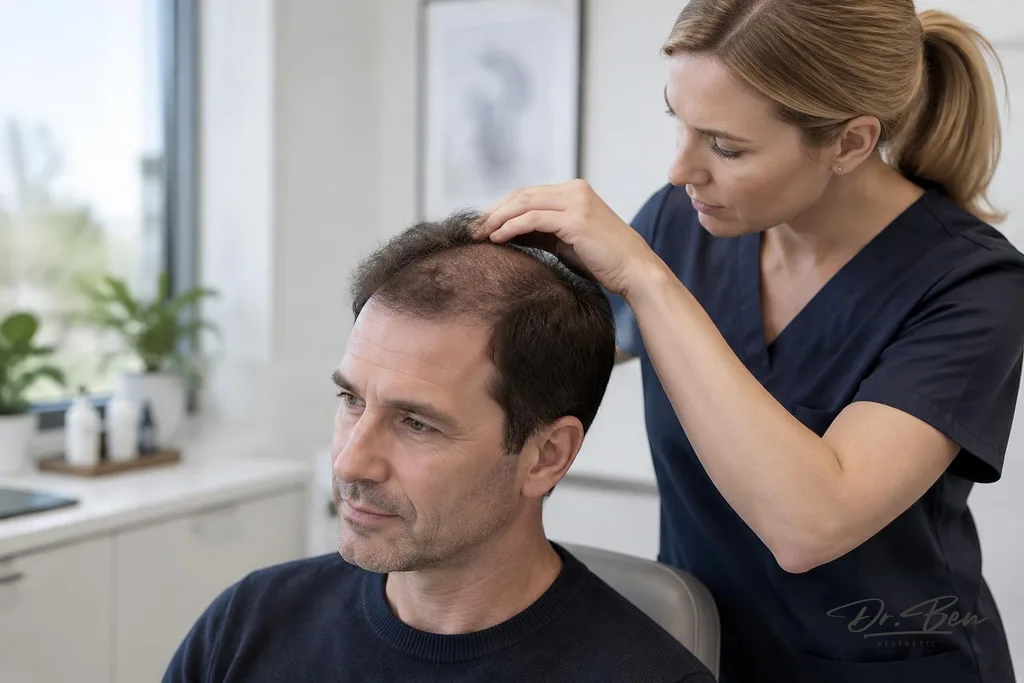
Hair Concerns We Assess
Common concerns include:
- Gradual hair thinning
- Receding hairline
- Widening part
- Male-pattern hair loss
- Female-pattern hair loss
- Sudden hair shedding
- Patchy hair loss
- Scalp symptoms
- Reduced hair density
A Medical Approach to Hair Loss Assessment
Hair loss assessment may include:
- Pattern of hair loss
- Duration and progression
- Degree of shedding
- Family history
- Medical history
- Medication review
- Nutritional factors
- Hormonal or thyroid factors
- Scalp examination
- Trichoscopy where appropriate
Treatment Depends on the Cause
Management may include:
- Medical hair-loss treatment
- Correction of nutritional or medical contributors
- Scalp treatment
- Hair-care advice
- Monitoring
- Regenerative treatment discussion where appropriate
- Referral to a dermatologist or other specialist if required
Not every form of hair loss is reversible, and response varies between individuals.
Next step
Arrange a consultation
Assessment in person is the only way to work out what is causing a skin concern and what can reasonably be done about it. Fees are explained before anything is arranged.
Medical disclaimer
This page is general information only and is not a diagnosis, a treatment recommendation, or a substitute for individual medical advice. Conditions that look similar can have different causes, and what is suitable for one person may not be suitable for another. If you are unwell, in significant pain, or worried about a rapidly changing symptom, seek medical care promptly. In an emergency call 000.
- Written for patients by
- Dr Benyamin Mansoori, cosmetic physician & skin cancer doctor
- Medically reviewed by
- Dr Benyamin Mansoori (MD, FRACGP, FACCSM), AHPRA MED0002097300
- Last medically reviewed