Skin Cancer Care
Skin Cancer Checks & Mole Assessment
Skin cancer can develop in areas that are easy to overlook and may not always cause symptoms. A skin cancer check can help identify new, changing or unusual spots that may need closer examination.
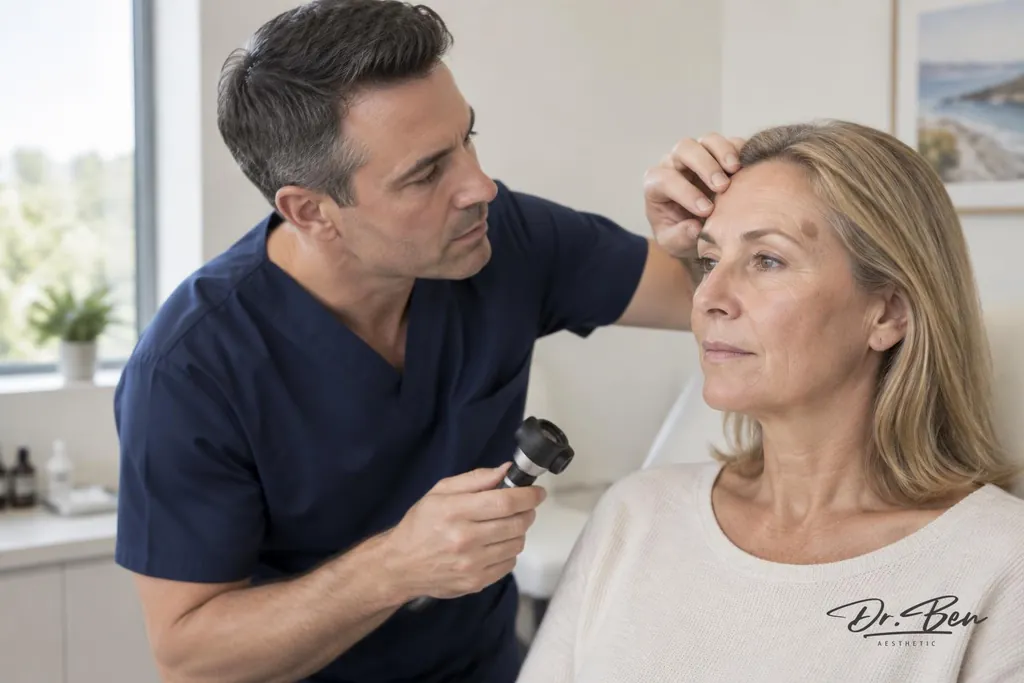
Dr Ben provides skin cancer checks, mole and lesion assessment and dermoscopy for patients concerned about new, changing or unusual skin lesions.
Skin Cancer Care Services
Services may include:
- Full skin checks
- Assessment of individual moles and skin lesions
- Dermoscopy
- Review of new or changing spots
- Assessment of sun-damaged skin
- Advice regarding lesions that may require monitoring, biopsy or further treatment
When Should You Have a Skin Check?
Consider arranging an assessment if you notice:
- A new mole or skin lesion
- A mole changing in size, shape or colour
- A spot that looks different from your other moles
- Persistent scaling or crusting
- A lesion that does not heal as expected
- Significant sun exposure
- A previous history of skin cancer
What Happens During Assessment?
Your skin and relevant medical history are reviewed, followed by examination of the areas of concern. Dermoscopy may be used to assess structures that are not visible to the naked eye.
If a lesion requires further investigation, appropriate options such as monitoring, biopsy or referral can be discussed, depending on the findings. No examination can guarantee that every skin cancer is found, so keep an eye on your skin between checks.
Next step
Arrange a consultation
Assessment in person is the only way to work out what is causing a skin concern and what can reasonably be done about it. Fees are explained before anything is arranged.
Medical disclaimer
This page is general information only and is not a diagnosis, a treatment recommendation, or a substitute for individual medical advice. Conditions that look similar can have different causes, and what is suitable for one person may not be suitable for another. If you are unwell, in significant pain, or worried about a rapidly changing symptom, seek medical care promptly. In an emergency call 000.
- Written for patients by
- Dr Benyamin Mansoori, cosmetic physician & skin cancer doctor
- Medically reviewed by
- Dr Benyamin Mansoori (MD, FRACGP, FACCSM), AHPRA MED0002097300
- Last medically reviewed