Skin conditions
Acne Treatment and Medical Assessment
Acne is a common inflammatory condition of the hair follicle and oil gland. It can appear at any age, and adult acne in particular is often different in pattern and cause from teenage acne.
The purpose of a consultation is to describe the type of acne you have, identify what may be contributing to it, and set out realistic management options and timeframes.
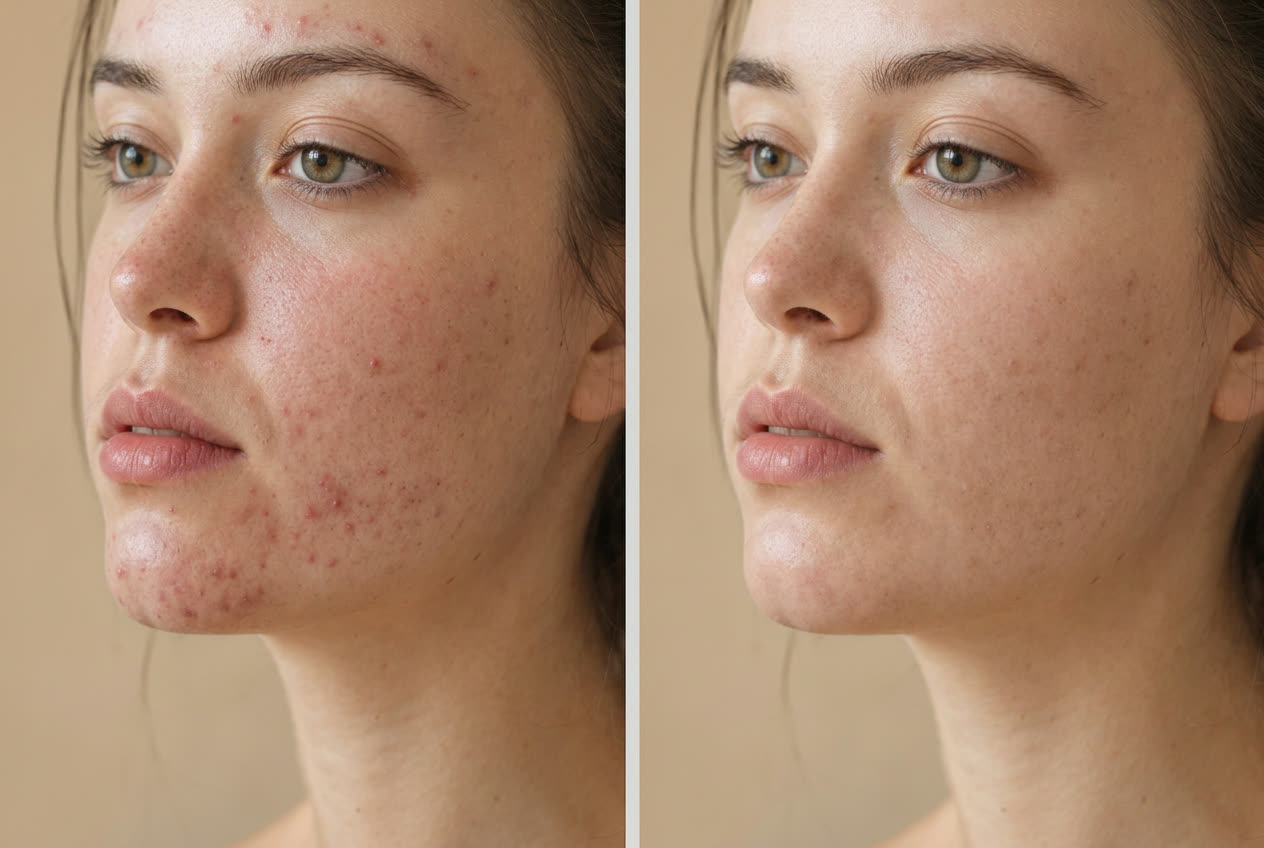
Types of acne presentation
- Comedonal acne — blackheads and whiteheads, often across the forehead, nose and chin
- Inflammatory acne — red papules and pustules that may be tender
- Nodulocystic acne — deeper, painful lumps that persist for weeks and carry a higher scarring risk
- Adult and hormonally patterned acne — often along the jawline, chin and neck, sometimes flaring cyclically
- Acne aggravated by external factors — occlusive products, friction, helmets, masks or some medications
Several patterns can occur together, and the mix matters because it influences what is likely to help.
When to arrange an assessment
- Acne has not improved after several months of over-the-counter treatment
- Lesions are painful, deep or leaving marks and scars
- Acne began or changed noticeably in adulthood
- The condition is affecting mood, confidence, work or study
- Acne is accompanied by other changes such as unusual hair growth or irregular periods
Possible causes and contributing factors
Acne develops through a combination of increased oil production, blockage of the follicle, bacterial activity within the follicle and inflammation. Individual factors vary in importance.
- Genetic predisposition and family history
- Hormonal influences, including cyclical flares and conditions such as polycystic ovary syndrome
- Some medications, including certain hormonal and steroid treatments
- Skin care and cosmetic products that block follicles
- Friction, occlusion, humidity and heavy sweating
- Picking and squeezing, which increases inflammation and scarring risk
Diet is frequently raised. Evidence for a general dietary cause is limited, though some people notice individual patterns; this can be discussed without unnecessary restriction.
What happens during the consultation
The consultation starts with your acne history: age of onset, how it has changed, previous prescription and non-prescription treatments, how long each was used, and how your skin responded. Current skin care, cosmetics, medications and any relevant general health issues are reviewed.
Examination looks at which areas are involved, the balance of comedones, inflammatory lesions and nodules, existing scarring, and any post-inflammatory pigmentation. This assessment is what a plan is based on.
Assessment and possible investigations
Most acne needs no tests. Investigations may be considered where the history suggests a hormonal or medical contributor, or where a proposed medication requires baseline or monitoring blood tests. Any test is explained before it is arranged, including why it is being done.
Treatment and management planning
Treatment categories are discussed in general terms below. Which, if any, is appropriate for you can only be decided in consultation, and nothing here should be started on the basis of this page.
- Adjusting skin care to reduce irritation and follicle blockage
- Topical treatments directed at blockage, bacteria or inflammation
- Oral treatments, which may be considered for moderate to severe or scarring acne
- Hormonally directed options, where appropriate and after discussion of risks
- Procedural options for residual marks and scarring, usually once active acne is controlled
Timeframes are important to expectations. Most acne treatments take six to twelve weeks before a fair judgement can be made, and skin can appear worse for the first few weeks. Maintenance is often needed after improvement, because stopping treatment altogether is a common reason for relapse.
Scarring and pigmentation
Brown or red marks left after a lesion settles are usually post-inflammatory colour change rather than scarring, and often fade slowly over months. True scars are changes in the skin's texture and are permanent unless treated, which is why controlling active acne early matters.
If textural scarring is your main concern, acne-scar assessment is a separate discussion.
Suitability, limitations and referral
No acne treatment is risk-free or guaranteed, and responses differ between people. Pregnancy, breastfeeding, planned pregnancy, other medications and existing medical conditions all affect what is suitable.
Referral to a dermatologist may be recommended for severe nodulocystic or scarring acne, acne that has not responded to appropriate treatment, or where specialist-supervised therapy is indicated.
Preparing for your appointment
- List the acne treatments you have used, with rough dates and how long each was used
- Bring the actual products or photographs of their labels where possible
- Bring a list of all current medications, including the contraceptive pill and supplements
- Attend without makeup if practical, or be willing to remove it
- Note anything that seems to trigger flares
Common questions
- How long before I can tell whether a treatment is working?
- Most acne treatments need about six to twelve weeks of consistent use before improvement can fairly be judged, and some skin looks worse initially. Review appointments are used to reassess rather than changing course too early.
- Will acne come back if I stop treatment?
- Acne is often a condition that is controlled rather than cured, particularly in adults. Many people need some form of maintenance, and that is planned with you rather than assumed.
- Can my acne be assessed from a photograph?
- No. Photographs can be useful for showing how skin looks at its worst, but acne type, severity, scarring and contributing factors are assessed in person.
Next step
Arrange a consultation
Assessment in person is the only way to work out what is causing a skin concern and what can reasonably be done about it. Fees are explained before anything is arranged.
Medical disclaimer
This page is general information only and is not a diagnosis, a treatment recommendation, or a substitute for individual medical advice. Conditions that look similar can have different causes, and what is suitable for one person may not be suitable for another. If you are unwell, in significant pain, or worried about a rapidly changing symptom, seek medical care promptly. In an emergency call 000.
- Written for patients by
- Dr Benyamin Mansoori, cosmetic physician & skin cancer doctor
- Medically reviewed by
- Dr Benyamin Mansoori (MD, FRACGP, FACCSM), AHPRA MED0002097300
- Last medically reviewed