Skin conditions
Acne-Scar Assessment
Acne scarring is not one thing. Marks left after acne can be colour change, texture change, or both, and the distinction changes what is realistic to expect from treatment.
An assessment appointment is about identifying the scar types present, whether acne is still active, and what an appropriately staged plan might look like.
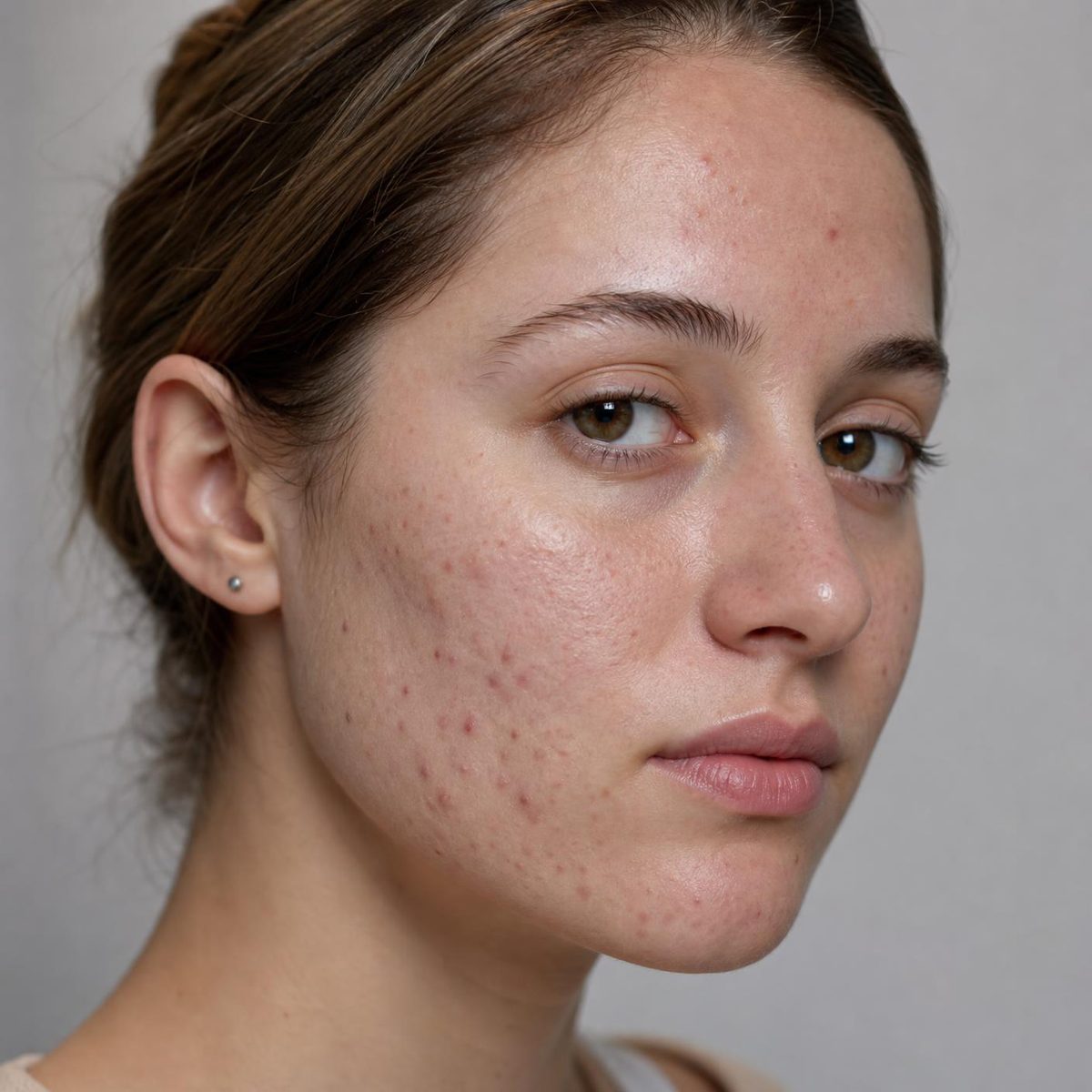
Distinguishing active acne, colour change and true scarring
- Active acne — current inflamed lesions. Scar treatment is generally deferred until this is controlled, because new lesions create new scars.
- Post-inflammatory erythema — pink or red flat marks where a lesion has settled; frequently fades over months.
- Post-inflammatory hyperpigmentation — brown flat marks, more common in deeper skin tones, and worsened by sun exposure.
- Atrophic scars — indented scars, often described as ice-pick, boxcar or rolling, reflecting loss of tissue.
- Hypertrophic and keloid scars — raised, firm scars more often seen on the chest, shoulders and jawline.
Flat colour change is not a scar in the structural sense, and treating it as though it were leads to unnecessary procedures.
Why scar type affects planning
Different scar types respond to different approaches, and most faces have a mixture. Deep narrow scars behave differently from broad shallow ones, and raised scars need an entirely different approach from indented ones. Planning is therefore about the mix, the depth, the number and the skin type, not a single technique applied to everyone.
Skin tone matters as well, because some approaches carry a higher risk of pigmentation change in deeper skin tones, and that risk is weighed before anything is recommended.
What happens during the consultation
Examination is done in good light and, where useful, with the skin stretched, because that reveals the true depth and edges of indented scars. Your acne history, current treatment, tendency to pigment or to form raised scars, and previous scar procedures are reviewed.
Photographs may be taken with your consent, as change in scarring is gradual and difficult to judge from memory.
Treatment and management planning
Where treatment is appropriate, it is usually staged: control active acne first, address pigmentation and sun protection, then consider textural work over a series of sessions with recovery time in between. Approaches are chosen for the scar type rather than being applied uniformly, and the sequence and likely number of sessions are discussed in advance.
Scar treatment is a slow process measured in months, and results are gradual.
Suitability, limitations and referral
Complete removal of acne scarring is not achievable. A realistic aim is improvement in depth, shadowing and texture, with the skin looking smoother rather than unmarked. Some scars improve considerably, others only modestly, and a small number do not respond.
Risks include temporary redness and swelling, pigmentation change, infection and, uncommonly, worsening of scarring. Where scarring is extensive, where keloid formation is a feature, or where surgical scar revision is likely to be required, referral is discussed.
Preparing for your appointment
- Attend without makeup so scars can be assessed accurately
- Bring photographs from when your acne was most active, if you have them
- List previous scar treatments, including any laser, needling or peels, with approximate dates
- Note any tendency to develop raised scars or pigmentation after injury
Common questions
- Can acne scars be removed completely?
- No. Treatment aims to improve the appearance and texture of scarring; it does not restore skin to a pre-acne state. Expected improvement is discussed individually before anything is planned.
- Should I treat scars while my acne is still active?
- Generally not. New inflammatory lesions can create new scars, so controlling active acne usually comes first.
Next step
Arrange a consultation
Assessment in person is the only way to work out what is causing a skin concern and what can reasonably be done about it. Fees are explained before anything is arranged.
Medical disclaimer
This page is general information only and is not a diagnosis, a treatment recommendation, or a substitute for individual medical advice. Conditions that look similar can have different causes, and what is suitable for one person may not be suitable for another. If you are unwell, in significant pain, or worried about a rapidly changing symptom, seek medical care promptly. In an emergency call 000.
- Written for patients by
- Dr Benyamin Mansoori, cosmetic physician & skin cancer doctor
- Medically reviewed by
- Dr Benyamin Mansoori (MD, FRACGP, FACCSM), AHPRA MED0002097300
- Last medically reviewed