Skin Concerns
Pigmentation & Sun Damage Assessment in Melbourne
Doctor-led assessment of facial pigmentation, sun spots, uneven skin tone and sun-related skin changes with Dr Benyamin Mansoori in Southbank and Malvern, Melbourne.
Skin colour changes can be caused by sun exposure, inflammation, hormones, ageing or a medical condition. They may appear as freckles, brown spots, patchy tone or marks after acne. Some are benign, but a new or changing pigmented lesion can warrant skin cancer assessment; diagnosis comes before cosmetic management.
Dr Ben provides individual medical consultation, investigation when needed and recommendations based on your circumstances. Photoprotection, risks and realistic expectations are part of the discussion. Not all pigmentation needs a procedure.
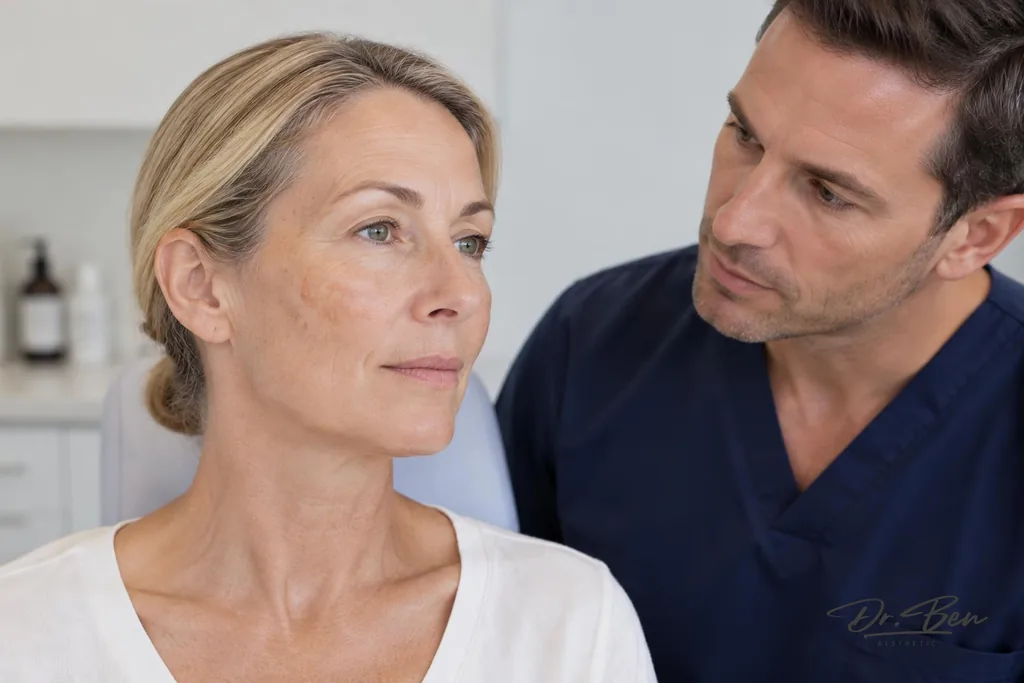
What Is Skin Pigmentation?
Skin pigmentation is the colour contributed by melanin, a pigment made by cells called melanocytes. Melanin contributes to natural skin, hair and eye colour and is part of the skin’s response to ultraviolet exposure.
Pigment may increase in a small area, form patches or appear more diffusely. The shape, distribution and evolution of a colour change provide clues, but appearance alone does not establish a diagnosis. Different pigmentary conditions require different management, and normal variations in skin colour do not necessarily need treatment.
Common Types of Pigmentation Concerns
Freckles (Ephelides)
Freckles are small, usually flat pigmented spots associated with genetics and sun exposure. They may become more noticeable in sunnier months and fade when exposure decreases. A spot that is unusual, changing or different from surrounding freckles should be assessed rather than assumed to be another freckle.
Sun Spots (Solar Lentigines)
Solar lentigines are flat pigmented spots associated with cumulative sun exposure, commonly on the face, hands, chest and shoulders. Typical sun spots are benign, but some skin cancers can resemble them. Clinical assessment comes before any cosmetic procedure aimed at a pigmented lesion.
Melasma
Melasma commonly appears as irregular brown or grey-brown patches on the cheeks, forehead or upper lip. Genetics, sunlight and hormonal influences can contribute. It is often persistent or relapsing, and inflammation or an inappropriate cosmetic method can aggravate it. Melasma Assessment provides further information about this particular condition without assuming that every patch of pigmentation is melasma.
Post-Inflammatory Hyperpigmentation
Post-inflammatory hyperpigmentation is increased pigment following acne, dermatitis, irritation, burns or procedures. Marks can persist after the original inflammation settles, with their duration and intensity varying between individuals and skin tones. Acne & Acne Scarring explains how post-acne colour changes differ from structural scars.
Uneven Skin Tone
Uneven tone can reflect several overlapping causes, including freckles, sun spots, melasma, inflammation and areas of redness. Assessment separates these concerns instead of treating them as one condition. Skin Texture & Enlarged Pores discusses texture changes that can coexist with uneven colour but may need different management.
Sun-Related Skin Changes
Cumulative ultraviolet exposure can alter pigmentation, surface texture and skin elasticity. Sun-exposed skin may also develop precancerous or cancerous lesions. A rough, evolving or otherwise suspicious area must be evaluated medically rather than treated solely as a cosmetic sign of ageing.
What Causes Pigmentation and Uneven Skin Tone?
Ultraviolet exposure is an important contributor to many pigmentation concerns. Visible light can also influence some conditions, particularly melasma. Genetic characteristics, hormonal changes, certain medications, inflammation and skin trauma can affect pigment production or distribution.
Ageing and some medical conditions may contribute to changes in skin colour. Several factors can act together, and the cause cannot be diagnosed from a dark spot alone. History and examination help determine which factors are relevant to you.
Sun Damage and Skin Health
Sun damage includes photoageing changes as well as an increased risk of skin cancer. Improving a visible spot does not remove the effects of past ultraviolet exposure or eliminate the need to watch for new skin changes.
Rough patches, non-healing sores, bleeding lesions or changing spots deserve medical review. Full Skin Checks explains broader skin assessment, which may be appropriate depending on your history and examination. A cosmetic pigmentation consultation is not a substitute for an indicated skin cancer assessment.
How Are Pigmentation Concerns Assessed?
The consultation considers when the pigmentation began, how it has evolved, its distribution and your sun exposure and protection habits. Dr Ben also asks about your skin tone, acne, eczema or dermatitis, hormonal influences, medical conditions, medications and previous skin products or procedures. Personal and family skin cancer history is considered where relevant.
Examination helps distinguish pigmentary conditions from individual lesions or active skin disease. Dermoscopy may be used when clinically indicated to examine a lesion in more detail. A suspicious lesion may require biopsy or referral; cosmetic removal should not occur before an appropriate diagnosis. Mole & Lesion Assessment describes the assessment of individual spots that need further evaluation.
Why Is Diagnosis Important Before Pigmentation Treatment?
Melasma, solar lentigines and post-inflammatory hyperpigmentation can all appear brown but do not behave in the same way. A possible malignant lesion may also be mistaken for benign pigmentation. The appropriate next step depends on the diagnosis, not simply the colour you would like to change.
An unsuitable procedure can worsen pigmentation, trigger inflammation or delay recognition of skin cancer. Assessment may lead to monitoring, medical care or referral rather than a cosmetic procedure. Where broader skin concerns coexist, a Skin-Quality Consultation can help clarify them without implying that treatment is required.
What Happens During Your Consultation?
1. Your Concerns and Their Onset
You can describe the changes you have noticed, when they appeared and what matters to you. The consultation considers symptoms, evolution and your priorities without assuming that normal variations in colour need correction.
2. Medical and Skin History
Dr Ben reviews relevant medical history, medications, skin conditions, sun exposure, hormonal factors and previous products or procedures. Previous irritation, pigment changes and treatment responses help inform your individual risk assessment.
3. Skin Examination
The skin is examined to assess the pattern of pigmentation and identify any lesions needing medical investigation. Dermoscopy is used if indicated, and additional investigation or referral is discussed where appropriate.
4. An Individualised Plan
The plan may include photoprotection, gentle skin care, medical management, monitoring, an appropriate procedure or specialist referral. Choosing no cosmetic treatment is a valid option, and a suspected skin cancer concern takes priority over cosmetic management.
5. Risks, Fees and Informed Consent
Expected limitations, material risks, alternatives and costs are explained before you decide whether to proceed. Consultation Fees provides the current fee information. You are under no obligation to have a procedure, and treatment at the first appointment is not assumed.
What Management Options May Be Discussed?
Sun Protection
Cancer Council Australia generally advises broad-spectrum, water-resistant SPF50 or SPF50+ sunscreen, applied properly and reapplied regularly during outdoor exposure, including after swimming, sweating or towel drying. Follow the product directions. Sunscreen should be combined with protective clothing, shade, a hat and sunglasses; sunscreen alone is not sufficient sun protection.
For some pigmentation conditions, additional individualised measures may be discussed, including visible-light protection where relevant. The aim is to reduce further exposure and support long-term skin health rather than promise that protection will erase existing pigmentation.
Medical Skin Care
Gentle cleansing, moisturising and care of the skin barrier may help reduce irritation. Any medical treatment, including prescribed options where appropriate, is discussed privately after clinical assessment. A public information page cannot determine which product or medicine is suitable for you.
Management of Melasma
Melasma management may involve careful sun and visible-light protection and individualised medical skin care. Improvement varies, maintenance may be needed and recurrence is common. Some procedures can provoke inflammation or make melasma worse, so suitability requires particular care.
Management of Post-Inflammatory Pigmentation
Addressing the original trigger, such as acne or dermatitis, is important before focusing on residual marks. Avoiding irritation and maintaining photoprotection can support gradual improvement, but the time course differs between individuals. Further inflammation can prolong or deepen pigmentation.
Skin and Laser Procedures
Selected procedures may be considered for diagnosed benign pigmentation after an assessment of suitability. Skin & Laser — Pigmentation & Sun Damage provides information about these consultations rather than a promise that a particular procedure will be appropriate or available at every clinic.
Suitability depends on the diagnosis, skin characteristics, equipment and operator experience. Not every dark lesion is suitable for laser treatment. Laser and other procedures may cause increased or reduced pigmentation, and can worsen melasma. Genuine service availability and individual risks must be confirmed before proceeding.
Specialist Referral
Referral to a dermatologist or another appropriate specialist may be needed when the diagnosis is uncertain, pigmentation is complex or difficult to manage, or a lesion is suspicious. Referral is a part of responsible assessment, not an indication that every concern needs a procedure.
Potential Risks of Pigmentation Treatments
Risks depend on the method used and may include redness, swelling, irritation, dermatitis, allergic reactions and infection. Procedures can cause post-inflammatory hyperpigmentation, hypopigmentation, burns or scarring. Pigmentation can recur or worsen, particularly with melasma.
Individual healing, underlying skin disease and previous reactions affect risk. No treatment can guarantee complete or permanent pigment removal, and the potential benefit must be weighed against the possibility of an unwanted colour change or other harm. Alternatives, including no procedure, should be discussed before consent.
Pigmentation Concerns in Different Skin Tones
Inflammation and procedures can lead to post-inflammatory pigmentation, with the risk and impact varying between individuals. Assessment takes account of your skin characteristics, past reactions, current inflammation and the proposed method rather than relying on skin tone alone.
No procedure is automatically suitable or unsuitable solely because of your skin tone. Careful selection, appropriate technique and aftercare may be important, and specialist advice can be appropriate when risks or the diagnosis are uncertain.
Can Sun Spots or Pigmentation Return?
Yes. Pigmentation may recur after improvement, and new spots can develop with continued or cumulative ultraviolet exposure. Melasma commonly relapses because its underlying influences may remain even when visible patches become lighter.
No procedure prevents all future pigmentation or removes the need for ongoing sun protection and skin monitoring. The consultation should distinguish a realistic improvement goal from an expectation of permanently uniform skin colour.
When Should a Pigmented Lesion Be Medically Investigated?
A new or changing pigmented lesion should be assessed, particularly if it has an irregular shape, uneven or multiple colours, or looks different from your other spots. Bleeding, crusting, a non-healing surface, persistent symptoms or rapid change also warrant medical review.
Not all melanomas follow the ABCDE pattern, and an unusual or evolving lesion deserves prompt assessment even if it does not meet a familiar checklist. Do not arrange cosmetic removal of a suspicious spot before diagnosis. If you are concerned about a change, seek medical assessment rather than waiting for a cosmetic treatment appointment.
Pigmentation & Sun Damage Consultation Locations
Dr Benyamin Mansoori consults at independent consulting sites in Melbourne. Capstone Medical Centre Southbank is located at 216 City Road, Southbank VIC 3006. Cosmetic Avenue Malvern is located at 1308 Malvern Road, Malvern VIC 3144.
Appointment availability and the services or options available should be confirmed with the relevant clinic. An assessment at either location does not imply that every investigation or procedure can be performed there.
Arrange a Pigmentation Assessment
A pigmentation assessment can help distinguish a benign colour change from a concern requiring further medical investigation. Dr Ben discusses the likely diagnosis, whether additional assessment is needed and appropriate management, monitoring or referral. You can choose not to have a cosmetic procedure.
This page is general information only and is not a diagnosis or individual treatment recommendation. Suspicious or evolving lesions deserve medical assessment rather than solely cosmetic care. Assessment, realistic expectations and informed consent come before any decision about treatment.
Common questions
- What causes facial pigmentation?
- Facial pigmentation can be influenced by ultraviolet exposure, genetics, hormones, inflammation, ageing and some medications or medical conditions. Several causes may overlap, so examination is needed to understand a particular change.
- What is the difference between melasma and sun spots?
- Melasma usually forms irregular patches and involves several influences, including sun exposure, genetics and hormones. Sun spots, or solar lentigines, are usually discrete flat spots associated with cumulative sun exposure. Clinical assessment is needed to distinguish them and exclude other lesions.
- Can sun damage be reversed?
- Some visible changes may improve with appropriate management, but damage may persist. Treating a visible spot does not undo all prior ultraviolet injury or remove the increased skin cancer risk associated with past exposure.
- Is pigmentation always a cosmetic concern?
- No. Some colour changes or individual pigmented lesions need medical investigation, including skin cancer assessment. Diagnosis should come before cosmetic treatment of a suspicious lesion.
- Can acne cause dark marks?
- Yes. Acne inflammation can leave post-inflammatory hyperpigmentation after a spot settles. These colour changes are different from structural acne scars, although both may occur together.
- Does melasma always disappear with treatment?
- No. Melasma can be persistent or recurrent, and response varies. Improvement and ongoing management may be possible, but complete or permanent disappearance cannot be guaranteed.
- Can laser treatment worsen pigmentation?
- Yes. Laser treatment can cause post-inflammatory hyperpigmentation, reduced pigmentation or a melasma flare, as well as other complications. Diagnosis, individual risk assessment and suitability are important before any procedure.
- Are pigmentation treatments suitable for darker skin tones?
- Some options may be appropriate after individual assessment. The risk of post-inflammatory pigmentation varies with skin characteristics, inflammation, previous reactions and the method used. Skin tone alone is not a reason for automatic inclusion or exclusion.
- How important is sunscreen for pigmentation?
- Sunscreen is an important part of photoprotection and can help limit further sun-related pigment changes. It should be used correctly alongside shade, protective clothing, a hat and sunglasses; it does not guarantee that existing pigmentation will disappear.
- Can sun spots be confused with skin cancer?
- Yes. Some skin cancers can resemble a benign sun spot. New, unusual or changing lesions should be medically assessed before cosmetic removal or treatment.
- Will pigmentation return after treatment?
- It may. The original pigmentation can recur and new spots may appear, particularly with further sun exposure. Melasma commonly relapses, and no procedure prevents all future pigment changes.
- Do I need treatment at my first consultation?
- No. The first consultation focuses on assessment, diagnosis and discussion of options. Skin care, monitoring, investigation or referral may be more appropriate. Any procedure requires informed consent, and same-day treatment is not assumed.
Next step
Arrange a consultation
Assessment in person is the only way to work out what is causing a skin concern and what can reasonably be done about it. Fees are explained before anything is arranged.
Medical disclaimer
This page is general information only and is not a diagnosis, a treatment recommendation, or a substitute for individual medical advice. Conditions that look similar can have different causes, and what is suitable for one person may not be suitable for another. If you are unwell, in significant pain, or worried about a rapidly changing symptom, seek medical care promptly. In an emergency call 000.
- Written for patients by
- Dr Benyamin Mansoori, cosmetic physician & skin cancer doctor
- Medically reviewed by
- Dr Benyamin Mansoori (MD, FRACGP, FACCSM), AHPRA MED0002097300
- Last medically reviewed