Skin conditions
Melasma and Facial Pigmentation Assessment
Melasma is a pigmentation condition that usually appears as symmetrical brown or grey-brown patches across the cheeks, forehead, upper lip or jawline.
It is persistent and prone to recurrence, so assessment focuses on confirming the pattern, identifying what drives it for you, and planning long-term management rather than a one-off correction.
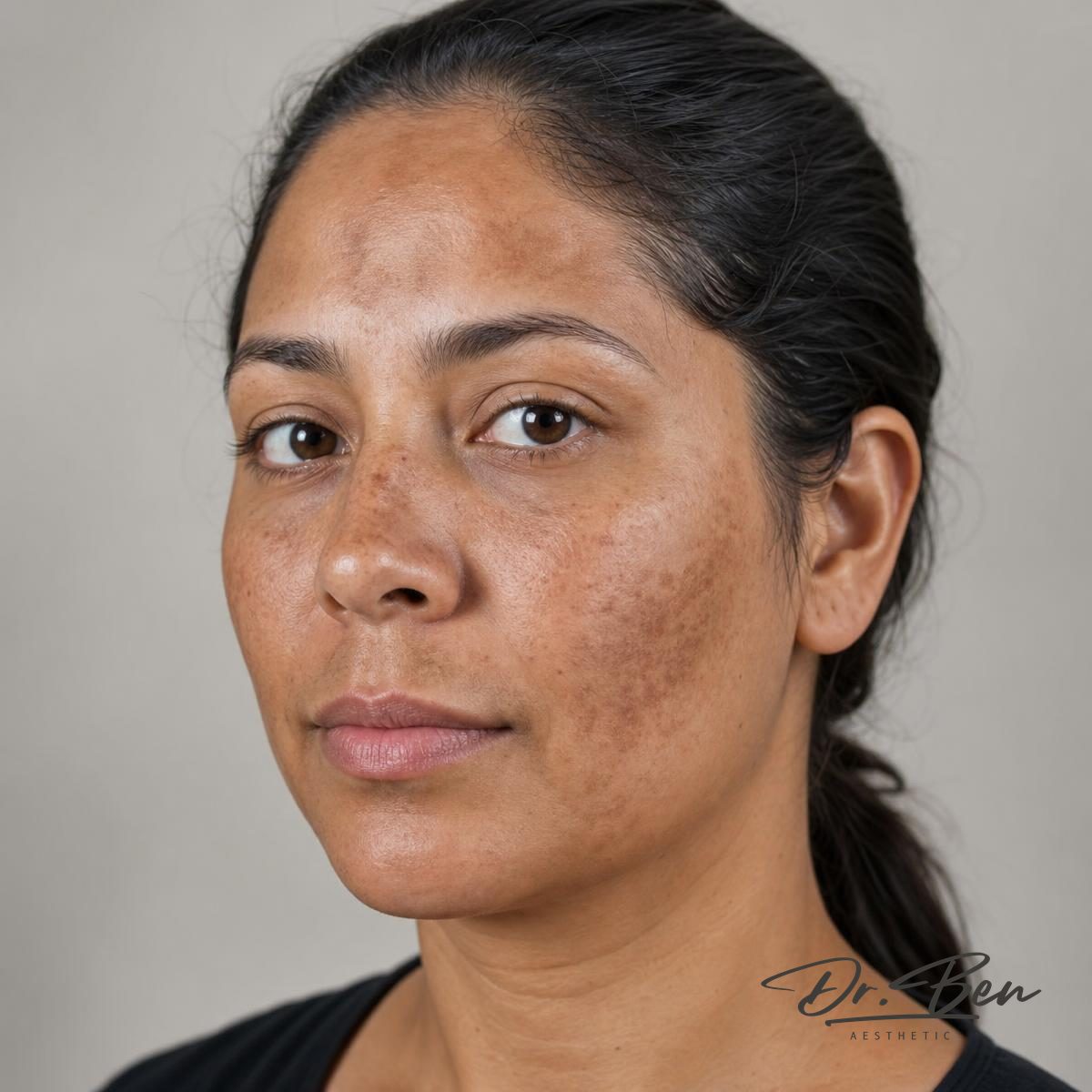
Patterns of facial pigmentation
Melasma is typically symmetrical and patchy with irregular borders. Other causes of facial pigmentation look different and behave differently, including post-inflammatory pigmentation after acne or a rash, freckling and sun-related pigmentation, and pigmentation associated with some medications.
Pigment may sit mainly in the upper layers of the skin, deeper down, or both, and this influences how much improvement is realistic.
Sun, light exposure, hormones and skin type
- Ultraviolet exposure, and also visible light, including on overcast days and through glass
- Heat, which can aggravate melasma independently of ultraviolet exposure
- Hormonal factors such as pregnancy, the contraceptive pill or hormone therapy
- Genetic predisposition and a family history of melasma
- Deeper skin tones, in which melasma is more common and pigmentation change after inflammation is more likely
- Irritating products or aggressive procedures, which can worsen pigmentation
Why accurate pigmentation assessment matters
Different pigmentation problems respond to different approaches, and some treatments that suit sun-related pigmentation can make melasma worse. Assessment includes examining the pattern and distribution, using magnification and lighting to judge the depth where useful, and reviewing your history of sun exposure, hormones, products and previous procedures.
Long-term management planning
Management is built in layers: rigorous daily protection from ultraviolet and visible light, gentle skin care that avoids irritation, and treatment directed at pigment production where appropriate. Procedural options are approached cautiously in melasma because over-treatment can aggravate it.
Improvement is measured over months. Maintenance is expected, and pigmentation commonly returns after summer, pregnancy or a lapse in sun protection.
Suitability, limitations and referral
Permanent clearance cannot be promised. A realistic goal is lightening and better control, with fewer and less noticeable flares. Some melasma proves resistant despite appropriate management. Where the diagnosis is uncertain or the pigmentation does not behave as expected, referral for a specialist opinion is discussed.
Preparing for your appointment
- Attend without makeup so the pattern can be assessed
- Bring photographs from different seasons if you have them
- List hormonal medications, including the contraceptive pill and hormone therapy
- Bring current skin care and sunscreen products, or photographs of the labels
- Note any previous peels, laser or light treatments and how your skin responded
Common questions
- Will melasma come back?
- Recurrence is common, particularly with sun and heat exposure or hormonal change. Ongoing protection and maintenance are part of any realistic plan.
- Is sunscreen alone enough?
- Consistent daily protection is the foundation of melasma management and, for some people, it produces meaningful improvement on its own. Whether anything further is appropriate is decided after assessment.
Next step
Arrange a consultation
Assessment in person is the only way to work out what is causing a skin concern and what can reasonably be done about it. Fees are explained before anything is arranged.
Medical disclaimer
This page is general information only and is not a diagnosis, a treatment recommendation, or a substitute for individual medical advice. Conditions that look similar can have different causes, and what is suitable for one person may not be suitable for another. If you are unwell, in significant pain, or worried about a rapidly changing symptom, seek medical care promptly. In an emergency call 000.
- Written for patients by
- Dr Benyamin Mansoori, cosmetic physician & skin cancer doctor
- Medically reviewed by
- Dr Benyamin Mansoori (MD, FRACGP, FACCSM), AHPRA MED0002097300
- Last medically reviewed