Skin conditions
Rosacea Assessment and Management
Rosacea is a chronic condition of facial skin, most often affecting the central face. It can involve flushing, persistent redness, visible blood vessels, inflammatory bumps and, in some people, eye symptoms.
Rosacea tends to fluctuate. The aim of management is to reduce flares and keep the skin settled over time rather than to cure it.
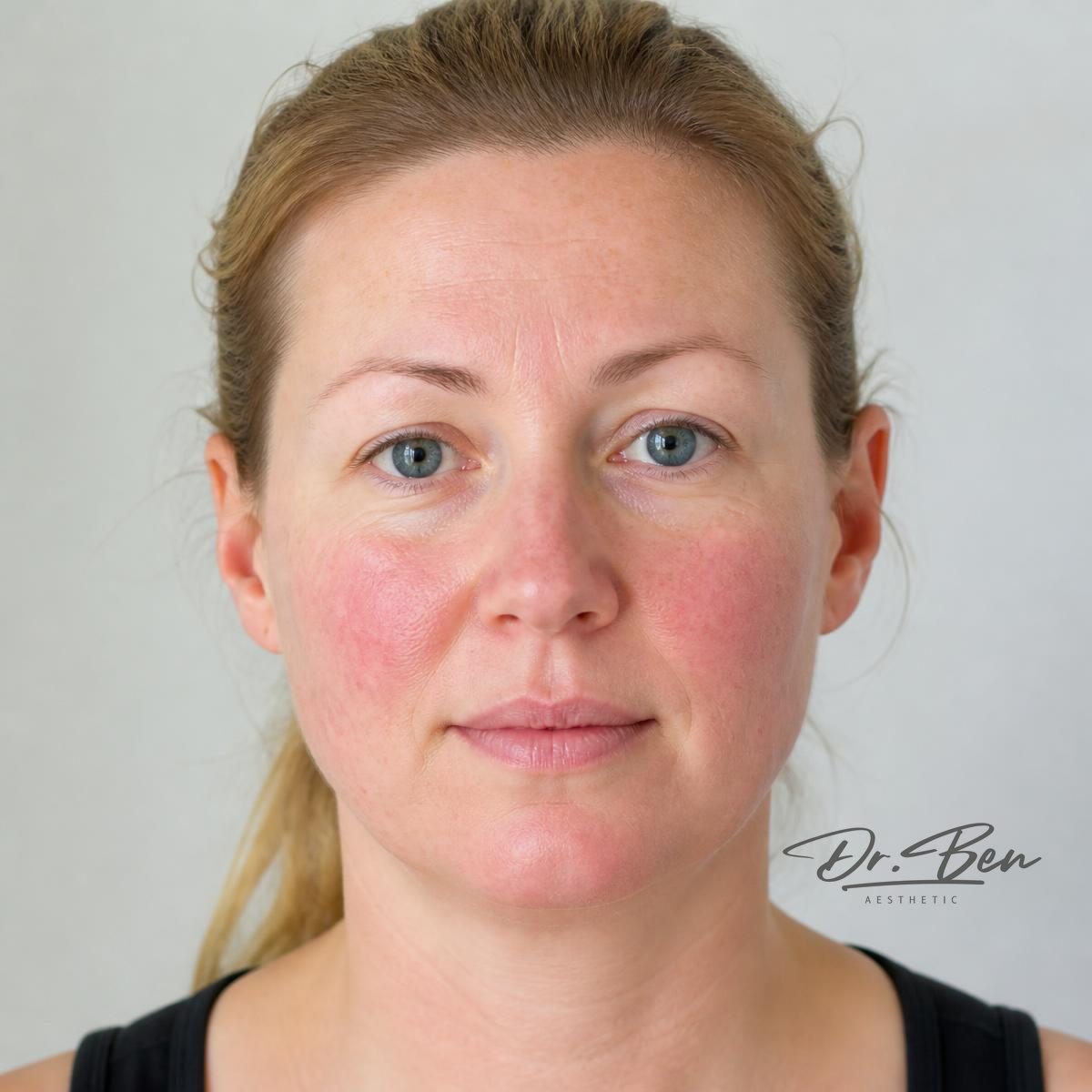
Features people notice
- Flushing — episodes of warmth and redness that build and then settle
- Persistent redness across the cheeks, nose, chin or forehead
- Telangiectasia — small visible blood vessels near the skin surface
- Inflammatory papules and pustules, without the blackheads typical of acne
- Stinging, burning or sensitivity to skin care products
- Thickening of the skin, particularly around the nose, in a minority of people
- Eye symptoms such as grittiness, dryness, irritation or recurrent styes
Eye symptoms that need prompt review
Arrange prompt medical or optometry review for significant eye pain, light sensitivity, or any change in vision. Ocular involvement can occur with rosacea and should not be left to see whether it settles.
Possible causes and common triggers
The underlying cause involves inflammation, blood vessel reactivity and the skin's barrier and immune response, with a genetic contribution. Triggers vary considerably between individuals; identifying yours is more useful than following a general list.
- Sun exposure and heat
- Hot drinks, spicy food and alcohol
- Sudden temperature change, exercise and emotional stress
- Harsh or fragranced skin care and some cosmetic procedures
- Certain medications, including some that dilate blood vessels
Conditions that can look like rosacea
Facial redness has several possible explanations, and assessment considers alternatives including seborrhoeic dermatitis, contact or perioral dermatitis, acne, sun damage, flushing related to medication, and less commonly connective tissue disease. Distinguishing them matters, because treatment that suits one can aggravate another.
What happens during the consultation
Assessment covers how long the redness has been present, whether flushing is episodic, what seems to provoke it, current skin care, previous treatments and any eye symptoms. Examination looks at the distribution of redness, the presence of vessels and inflammatory lesions, and skin sensitivity.
Skin care and treatment planning
Management usually combines gentle skin care and daily sun protection, identifying and reducing personal triggers, and treatment directed at the dominant feature — inflammatory lesions and background redness respond to different approaches, and persistent visible vessels behave differently again.
Improvement is generally gradual and maintenance is usually needed, because rosacea tends to return when treatment stops.
Suitability, limitations and referral
Rosacea can be controlled but not cured, and flares can still occur during well-managed treatment. Suitability of any option depends on your skin, other conditions, pregnancy status and medications. Referral to a dermatologist or ophthalmologist is discussed where disease is severe or resistant, where the diagnosis is uncertain, or where eye involvement needs specialist care.
Preparing for your appointment
- Attend without makeup if practical so redness and vessels can be assessed
- Keep a short diary of flares and what preceded them
- Bring your current skin care products or photographs of the labels
- Note any eye symptoms, even mild ones
Common questions
- Is rosacea the same as acne?
- No. They can look similar when inflammatory bumps are present, but rosacea does not typically produce blackheads, and treatments differ. Some people have both, which is worth identifying at assessment.
- Will rosacea go away permanently?
- Rosacea is usually a long-term condition that is managed rather than cured. Many people achieve long periods with settled skin, and maintenance is planned with that in mind.
Next step
Arrange a consultation
Assessment in person is the only way to work out what is causing a skin concern and what can reasonably be done about it. Fees are explained before anything is arranged.
Medical disclaimer
This page is general information only and is not a diagnosis, a treatment recommendation, or a substitute for individual medical advice. Conditions that look similar can have different causes, and what is suitable for one person may not be suitable for another. If you are unwell, in significant pain, or worried about a rapidly changing symptom, seek medical care promptly. In an emergency call 000.
- Written for patients by
- Dr Benyamin Mansoori, cosmetic physician & skin cancer doctor
- Medically reviewed by
- Dr Benyamin Mansoori (MD, FRACGP, FACCSM), AHPRA MED0002097300
- Last medically reviewed