Skin conditions
Hyperhidrosis (Excessive Sweating) Assessment
Hyperhidrosis means sweating beyond what the body needs for temperature control. It commonly affects the underarms, palms, soles or face, and can interfere with work, study, clothing choices and social confidence.
Assessment distinguishes primary hyperhidrosis from sweating caused by another condition or medication, because that difference determines what should be done next.
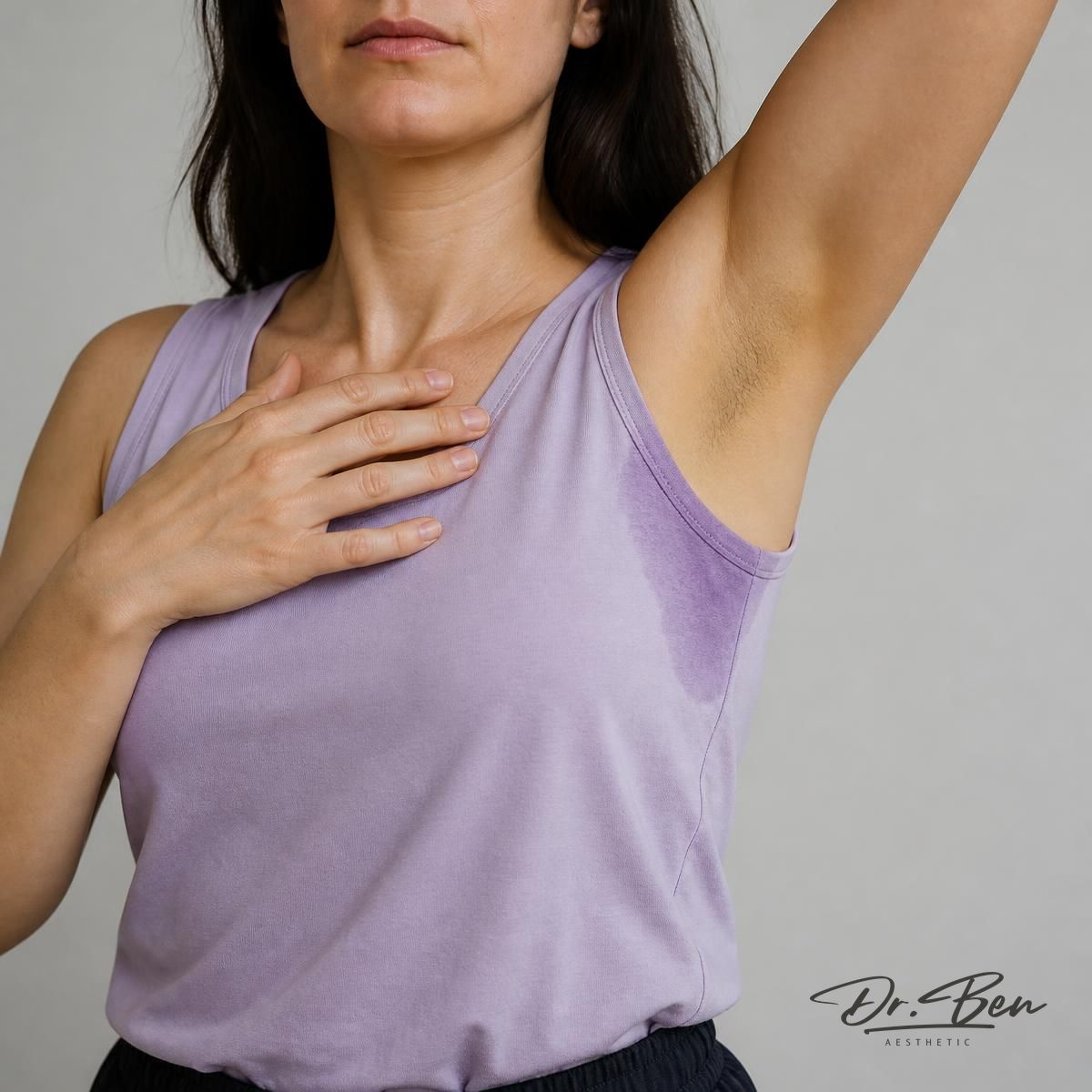
Primary and secondary excessive sweating
Primary hyperhidrosis usually begins in childhood or adolescence, affects specific areas fairly symmetrically, occurs during waking hours and often runs in families. Secondary hyperhidrosis is caused by something else — a medical condition, a medication, or a hormonal change — and is more likely when sweating is generalised, began later in life, or occurs at night.
Night sweats, unexplained weight loss, fever or feeling generally unwell alongside sweating need medical assessment rather than treatment aimed at the sweating itself.
Areas affected and daily impact
- Underarms, with visible marks on clothing and frequent changes of clothes
- Palms, affecting handwriting, keyboards, tools and handshakes
- Soles, causing slipping in footwear and skin maceration
- Face and scalp, often triggered or worsened by stress and heat
The practical and social impact is part of the assessment, not an afterthought, because it influences whether treatment is warranted.
Possible underlying causes
- Thyroid and other endocrine conditions
- Blood sugar disturbance in people with diabetes
- Menopause and other hormonal changes
- Some medications, including certain antidepressants and hormone treatments
- Infection, and less commonly other systemic illness
- Anxiety, which can both contribute to and result from excessive sweating
What happens during the consultation
The consultation reviews when sweating started, which areas are involved, whether it occurs at night, family history, general health, current medications and what you have already tried. The affected areas are examined, and skin problems that follow persistent moisture, such as irritation or fungal infection, are checked for.
When further investigation is needed
Blood tests may be arranged where the history suggests a thyroid, hormonal, metabolic or infective cause, or where sweating is generalised or nocturnal. Where a medication is the likely cause, that is reviewed with the prescriber rather than changed unilaterally.
Treatment categories and management planning
Where primary hyperhidrosis is confirmed, options are discussed in general categories: topical antiperspirant treatments used correctly, which are often the first step; procedural options that temporarily reduce sweating in a treated area; and, less commonly, oral medication or specialist procedures. Which are appropriate, and whether any is appropriate at all, depends on the assessment.
Where sweating is secondary, treating the underlying cause takes priority.
Suitability, limitations and referral
Treatment reduces sweating rather than abolishing it, effects of procedural options are temporary and require repeating, and sweating typically returns as the effect wears off. Compensatory sweating elsewhere can occur. All options carry risks, which are explained before consent. Referral to an endocrinologist, dermatologist or surgical service is discussed where an underlying condition is identified or where severe hyperhidrosis has not responded.
Preparing for your appointment
- Note when sweating started and whether it happens during sleep
- Record which areas are affected and in what situations
- Bring a full medication list, including recently started medications
- Bring any recent blood test results
- List antiperspirants and treatments already tried, and how they were used
Common questions
- Is heavy sweating always a sign of something serious?
- Usually not. Most excessive sweating is primary hyperhidrosis with no underlying disease. Assessment is still worthwhile, particularly when sweating is generalised, occurs at night or began later in life.
- Are the effects of treatment permanent?
- No. Available options reduce sweating for a period and generally need to be repeated or continued. Expected duration is discussed before anything is arranged.
Next step
Arrange a consultation
Assessment in person is the only way to work out what is causing a skin concern and what can reasonably be done about it. Fees are explained before anything is arranged.
Medical disclaimer
This page is general information only and is not a diagnosis, a treatment recommendation, or a substitute for individual medical advice. Conditions that look similar can have different causes, and what is suitable for one person may not be suitable for another. If you are unwell, in significant pain, or worried about a rapidly changing symptom, seek medical care promptly. In an emergency call 000.
- Written for patients by
- Dr Benyamin Mansoori, cosmetic physician & skin cancer doctor
- Medically reviewed by
- Dr Benyamin Mansoori (MD, FRACGP, FACCSM), AHPRA MED0002097300
- Last medically reviewed