Facial Treatments
Skin Boosters & Bioremodelling Consultation in Melbourne
Dr Benyamin Mansoori provides doctor-led, individual skin-quality assessment in Southbank and Malvern, Melbourne. Skin ageing, genetics, sun exposure and skin-care habits can all influence hydration, texture, elasticity and appearance.
Skin boosters and bioremodelling are not standardised, uniform products or treatments. Their mechanisms, supporting evidence and potential risks vary. A consultation assesses your concerns and circumstances; it does not mean that treatment is necessary or suitable, guarantee a result or oblige you to proceed.
What Are Skin Boosters and Bioremodelling Treatments?
Skin boosters and bioremodelling are loosely defined industry terms, not standardised names for a single product or treatment. They may describe approaches intended to influence hydration, texture or other aspects of skin quality. Some involve injections; other techniques may be discussed under similar labels. A label alone does not explain what is being used, how it works or whether it is appropriate.
Products, techniques and proposed mechanisms differ, as do the quality of supporting evidence, potential outcomes and risks. Evidence for one intervention cannot automatically be applied to another. A skin-quality consultation considers the specific concern and available evidence rather than treating these categories as interchangeable or recommending a product simply because of its name.
Common Skin Concerns Discussed During Consultation
Skin concerns can have several causes and may overlap. Examination should consider underlying skin disease, irritation and sun damage before a cosmetic option is discussed. New, changing, painful or persistently inflamed areas may need medical assessment rather than a cosmetic procedure.
Hydration and Dryness
Dryness, tightness and flaking can reflect a disrupted skin barrier, irritating products, environmental exposure or a skin condition. Skin-care habits and symptoms are reviewed first. Gentle skin care and appropriate medical management may be more relevant than a procedure; an injectable approach is not a substitute for diagnosing persistent dryness.
Fine Lines and Texture
Fine lines and uneven texture may relate to age, sun exposure, movement and skin-barrier changes. Their depth, distribution and associated skin findings help guide the discussion. Not every line responds to the same approach, and complete smoothing cannot be promised.
Crepey or Thin Skin
Crepey appearance and thin skin can affect the face and other areas. Assessment considers skin thickness, fragility, sun damage and any tendency to bruise or heal poorly. Thin skin may make irregularities more visible and can limit which interventions are reasonable.
Changes in Elasticity
Changes in elasticity may occur alongside alterations in deeper tissue support. A skin-quality approach does not necessarily address structural laxity or replace specialist assessment where needed. The degree and cause of the change matter more than a treatment-category label.
Dull or Uneven Skin
An uneven or dull appearance may reflect dryness, pigmentation, inflammation or sun damage. These findings need individual assessment rather than an assumption that hydration alone will resolve them. Skin care, medical treatment or referral may be discussed according to the cause.
Which Areas Can Be Assessed?
Assessment may include the face, skin around the mouth, neck, décolletage and hands. Discussing an area does not establish that a particular product or procedure is suitable or available for it. Skin thickness, anatomy, previous procedures and the intervention’s specific indications all affect the decision.
The region near the eyes requires particular caution because of delicate tissues and proximity to blood vessels and the visual system. An under-eye assessment may be more appropriate for hollowness, puffiness or eyelid concerns. A treatment suitable elsewhere should not be assumed suitable around the eyes.
How Do Skin Boosters Differ From Facial Volumising Treatments?
Skin-quality approaches generally focus on concerns such as hydration and texture, whereas facial volumising approaches may address contour or structural support. However, terminology overlaps, and some interventions may affect more than one feature. Products and procedures cannot be distinguished safely by marketing terms alone.
Facial contouring and volume assessment considers facial proportions and support alongside skin findings. If you have several concerns, a cosmetic consultation and facial assessment can help distinguish skin-quality questions from structural ones, discuss limitations and consider whether any intervention is appropriate.
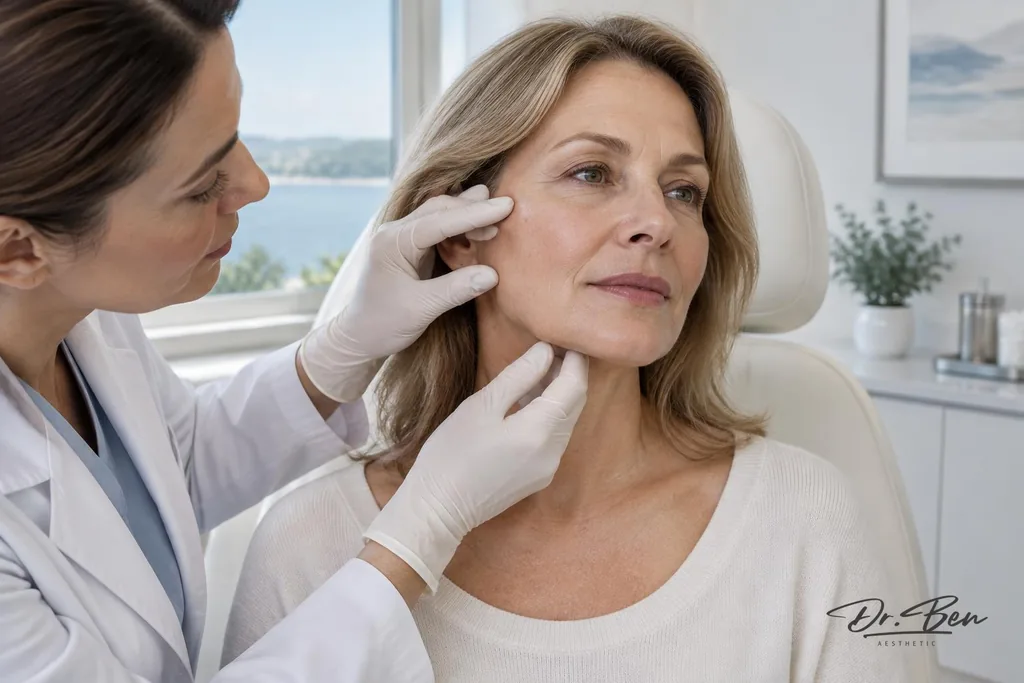
What Happens During Your Skin-Quality Consultation?
Your consultation generally includes five stages. You can ask questions, take time to consider the information and decide against treatment.
- Concerns and goals: discuss dryness, fine lines, texture or other changes, when they began and what you hope to understand. Your priorities, preferences and expectations guide the assessment rather than a preset treatment plan.
- Medical and treatment history: review relevant health conditions, medicines, allergies, pregnancy or breastfeeding where applicable, skin-care products and previous procedures. Bring available records and describe any adverse reactions. Previous filler concerns should be assessed before further procedures are considered.
- Skin examination: assess skin quality, thickness, hydration, texture, elasticity, pigmentation and relevant anatomy. Signs of infection, inflammation or another skin condition may require investigation or medical care before cosmetic options are discussed.
- Options and alternatives: review findings and evidence for specific approaches, including appropriate skin care, medical treatment, referral or no treatment. An intervention may not be suitable, and a different type of assessment may be needed.
- Risks, costs and informed consent: discuss expected limitations, material risks, recovery, follow-up and costs before any decision. Consent is an informed process, not an assumption based on attendance; you have no obligation to proceed.
See Fees & Pricing for consultation fees. Treatment and procedure fees are provided after individual assessment and explained before proceeding. A same-day procedure is not assumed; clinical and regulatory requirements, further assessment or a separate appointment may be necessary.
Potential Benefits and Realistic Expectations
Some specific interventions have evidence for changes in selected skin-quality measures, but the strength and relevance of that evidence vary. Proposed benefits should be discussed in relation to the particular procedure, the area assessed and your circumstances, not presented as a benefit shared by everything called a skin booster or bioremodelling treatment.
Responses vary, and a visible improvement may be limited or absent. Where an intervention is appropriate, the number and spacing of sessions, time to assess a response and any ongoing care depend on the procedure and individual findings. No fixed course, duration of effect or cosmetic outcome can be guaranteed; repeated procedures also involve additional costs and risks.
Risks and Possible Complications
Risks depend on the specific procedure, technique, area and individual health factors. Possible effects include pain, tenderness, swelling, bruising and erythema (redness). Complications may include infection, allergy or inflammatory reactions, persistent nodules or lumps, contour irregularities, asymmetry, pigmentation changes and scarring. An unsatisfactory result or complication may require further care, and correction is not always straightforward or possible.
Some injectable procedures can uncommonly cause vascular injury or vascular occlusion (a blocked blood vessel), leading to tissue damage or necrosis (tissue death). Rare severe visual damage, including permanent blindness, can occur. The risk is especially important when considering facial anatomy and areas near the eyes. These risks require a procedure-specific informed-consent discussion; no procedure is risk-free and no result is guaranteed.
This page explains assessment and safety considerations. It does not recommend or promote a prescription-only medicine, name a preferred product or establish that an injectable procedure is appropriate for you.
Who May Not Be Suitable?
Active infection or significant inflammation in the proposed area may require treatment or postponement. Relevant medical conditions, allergies, medicines affecting bleeding or healing, and previous adverse reactions may change suitability. Do not stop prescribed medicines without advice from the clinician responsible for them.
Pregnancy and breastfeeding require consideration of the particular intervention and available safety information; elective cosmetic procedures may be deferred where evidence is insufficient or the intervention is inappropriate. Expectations that cannot reasonably be met, unresolved previous complications or difficulty weighing risks may also mean that no procedure is recommended. A consultation cannot promise eligibility.
Treatment Recovery and Aftercare
If a procedure is agreed, recovery and aftercare should be explained for that specific intervention. Guidance may include gentle skin care, sun protection, temporary restrictions and follow-up arrangements. Do not assume that recovery is the same across these loosely defined categories; healing and the need for review vary.
Seek urgent medical assessment for severe or increasing pain, blanching, unusual skin discolouration or other concerning changes after a procedure, particularly a recent injection. Sudden visual disturbance or acute eye symptoms require emergency care: call 000 or attend an emergency department immediately rather than wait for a routine follow-up. Spreading redness, fever or worsening swelling also need prompt medical advice.
Skin Boosters, Bioremodelling and Collagen-Stimulating Treatments
Collagen-stimulating treatments describe another broad group of approaches with different proposed tissue responses. They are not synonymous with hydration-focused procedures, although industry terminology may overlap. Neither the label nor a proposed mechanism establishes the magnitude or reliability of a clinical benefit.
The specific method, evidence, indications and risks need separate assessment. Some approaches may affect tissue structure rather than primarily skin hydration, and their recovery and complications can differ. Discussing these categories does not mean that combining them is necessary, suitable or more effective.
Skin-Quality Consultation Locations
Dr Benyamin Mansoori consults at Capstone Medical Centre Southbank, 216 City Road, Southbank VIC 3006, and Cosmetic Avenue Malvern, 1308 Malvern Road, Malvern VIC 3144.
Both are independently operated consulting locations, not clinics owned, operated or managed by Dr Ben Aesthetic. Please confirm availability and appointment arrangements before attending.
Arrange a Skin-Quality Consultation
A consultation offers an opportunity to discuss your skin concerns, understand examination findings and consider evidence, alternatives and potential risks with Dr Ben. It does not guarantee a result or confirm that a product or procedure is necessary, suitable or available.
You can ask questions, take time to consider options, seek another opinion or choose no treatment. This information is general and is not a diagnosis, a treatment recommendation or a substitute for individual medical advice.
Common questions
- What is the difference between skin boosters and bioremodelling?
- These are loosely defined industry terms rather than standardised treatments. They may describe different products and techniques with different proposed mechanisms, evidence and risks. The actual intervention needs to be explained; the terms alone do not establish suitability or expected results.
- Can these treatments help with skin hydration?
- Some specific interventions have evidence relating to selected hydration measures, but response and evidence vary. Dryness may reflect skin-barrier problems or an underlying condition needing skin care or medical assessment. A procedure is not automatically appropriate and improvement cannot be guaranteed.
- How do skin boosters differ from volumising filler?
- Skin-quality approaches generally focus on hydration or texture, while volumising approaches may address contour or support. Terminology and effects can overlap. The specific product, procedure and anatomy matter more than the label, and neither category is automatically suitable.
- Can skin boosters or bioremodelling address fine lines?
- Fine lines can have several causes. Some interventions may be considered after assessment, but evidence and responses vary, and complete smoothing is not guaranteed. Skin care, medical management, another approach or no treatment may be more appropriate.
- Which areas can be assessed?
- The face, mouth area, neck, décolletage and hands may be assessed. This does not mean every intervention is suitable for each area. The region around the eyes needs particular caution and may require a separate assessment or specialist advice.
- How many sessions would I need?
- There is no universal number. If an intervention is appropriate, timing and any further sessions depend on the specific procedure, evidence, your skin findings and response. A fixed course or outcome cannot be promised, and the costs and risks of further procedures should be discussed.
- Are skin boosters and bioremodelling treatments risk-free?
- No. Risks vary and may include pain, swelling, bruising, redness, infection, allergy, inflammation, nodules, pigmentation changes, asymmetry and scarring. Some injectable procedures can cause uncommon severe vascular injury, tissue necrosis or rare visual damage including permanent blindness. Individual suitability and material risks must be discussed.
- Can I have treatment on the day of my consultation?
- Same-day treatment should not be assumed. Assessment, suitability, informed consent and relevant clinical and regulatory requirements must be addressed first. Further investigation, time to consider options or a separate appointment may be needed, and treatment may not be recommended.
- Do I have to proceed with treatment?
- No. A consultation is for assessment and information, not a commitment to a procedure. You may ask questions, take time, defer a decision, seek another opinion or choose no treatment without pressure.
Next step
Arrange a consultation
Assessment in person is the only way to work out what is causing a skin concern and what can reasonably be done about it. Fees are explained before anything is arranged.
Medical disclaimer
This page is general information only and is not a diagnosis, a treatment recommendation, or a substitute for individual medical advice. Conditions that look similar can have different causes, and what is suitable for one person may not be suitable for another. If you are unwell, in significant pain, or worried about a rapidly changing symptom, seek medical care promptly. In an emergency call 000.
- Written for patients by
- Dr Benyamin Mansoori, cosmetic physician & skin cancer doctor
- Medically reviewed by
- Dr Benyamin Mansoori (MD, FRACGP, FACCSM), AHPRA MED0002097300
- Last medically reviewed