Skin Quality & Previous Treatment Concerns
Previous Dermal Filler Concerns & Assessment in Melbourne
Dr Benyamin Mansoori provides doctor-led consultations in Southbank and Malvern for concerns about previous dermal filler, including lumps, swelling, asymmetric contour, suspected migration or uncertainty about the product previously used.
Symptoms or changes may appear soon after treatment or months or years later. Not every change means retained filler or a complication: normal anatomy, skin and soft-tissue changes and other medical causes may contribute.
The consultation aims to assess the underlying cause and discuss appropriate next steps. It does not automatically mean that further treatment or dissolving is necessary or suitable, and no result is guaranteed.
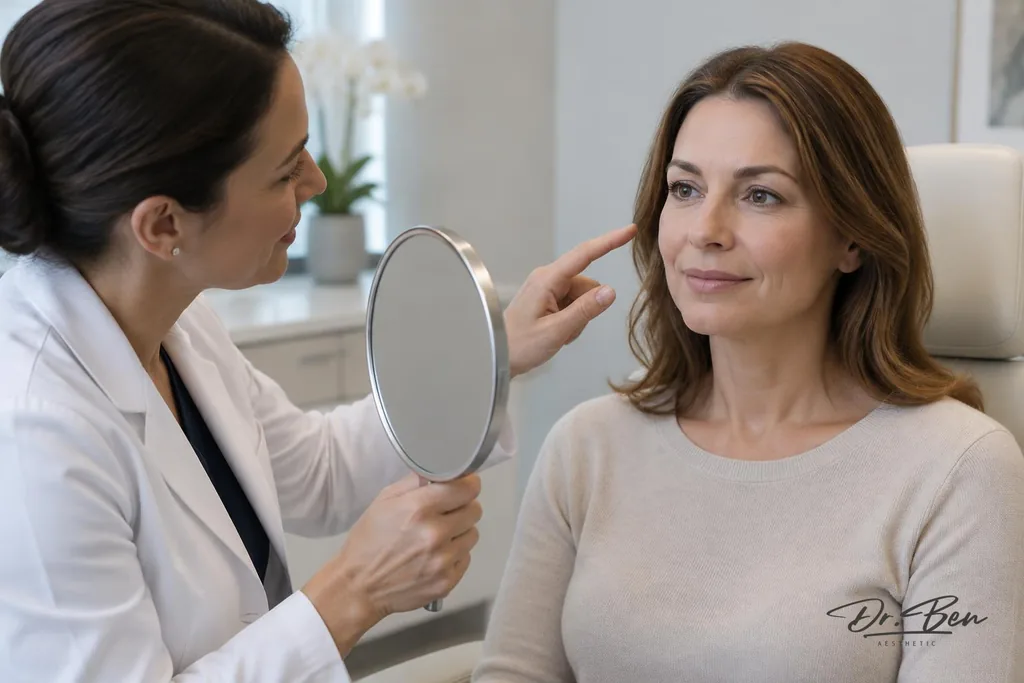
What Are Common Concerns Following Previous Dermal Filler Treatment?
Persistent or Unwanted Facial Volume: A fuller appearance may reflect retained product, swelling, normal soft tissue or changes in facial anatomy. Comparing your current concerns with previous photographs and treatment records can help, but appearance alone does not establish the cause. A facial contouring and volume assessment considers the whole face rather than assuming that one area needs correction.
Facial Asymmetry: Some difference between the two sides of the face is normal. Asymmetry noticed after treatment may relate to product placement, swelling, pre-existing anatomy or later changes. Examination helps distinguish these possibilities; neither assessment nor a corrective procedure can guarantee perfect symmetry.
Suspected Filler Migration: Migration describes material moving beyond its intended placement. A new bulge or change in contour can raise this concern, but swelling, normal anatomy and other tissue changes can look similar. Appearance alone is not diagnostic of migration.
Lumps and Nodules: A lump may be associated with filler, inflammation, infection, scar tissue or an unrelated skin or soft-tissue condition. The timing, tenderness, redness and whether it is changing matter. Avoid repeatedly squeezing or attempting to correct a lump yourself; seek medical assessment, particularly if it is painful or inflamed.
Persistent or Delayed Swelling: Swelling can appear soon after a procedure or recur months or years later. Possible causes include reactions around previous material, infection and other medical conditions. Persistent or worsening swelling should be assessed rather than automatically attributed to retained filler.
Lip and Under-Eye Concerns: These areas have sensitive anatomy and can show small changes in contour or swelling prominently. A lip consultation can consider shape, movement and previous procedures, while an under-eye assessment considers eyelid anatomy, cheek support and other causes of puffiness. Concerns in both areas can be discussed together without assuming either needs a procedure.
Unknown or Long-Standing Filler: Bring product details, dates, the areas treated, photographs and any records from the original provider if available. You can still seek assessment without this information. Ultrasound may help in selected cases, but cannot reliably identify every material or establish the exact product used.
Why Is Medical Assessment Important?
A change after cosmetic treatment is not always caused by filler or a treatment complication. Skin conditions, dental problems, changes in normal tissues and other medical causes may also require consideration. A cosmetic consultation and facial assessment brings together your history, symptoms and examination before discussing whether further investigation or management is appropriate.
Pain, redness, tenderness, warmth or increasing swelling can indicate an inflammatory or infectious process and deserve medical review. Adding more product or arranging automatic correction without understanding the cause may make assessment more difficult or expose you to unnecessary risk. Urgent warning signs are described below.
Can Old Dermal Filler Remain in the Face?
How long material remains depends on the product, its placement, the treated area and individual biological factors. Some materials may persist longer than expected, including for years. The visible cosmetic effect and the presence of residual material are not necessarily the same thing.
A fuller or changed appearance does not prove that old filler is still present. Likewise, time since treatment does not establish that all material has disappeared. Records, examination and selected investigations may help clarify the situation, but uncertainty can remain.
How Can Ultrasound Assist with Previous Filler Concerns?
When clinically indicated and available, high-frequency ultrasound uses sound waves to examine soft tissues. It may help show the location, depth and distribution of some deposits, as well as nodules, possible fluid collections and surrounding structures. Ultrasound assessment and filler dissolving are separate considerations: imaging does not itself mean that dissolving is needed.
Findings depend on the equipment, operator and material being assessed and must be interpreted alongside symptoms and examination. Ultrasound cannot always identify the exact filler, detect every deposit or explain every complication. It is not mandatory for everyone; another investigation or specialist referral may be more appropriate.
Does Previous Filler Always Need to Be Dissolved?
No. Previous filler without a clinically significant problem may not require any intervention. Observation, investigation of another cause or specialist advice may be more appropriate than dissolving.
Certain hyaluronic-acid-based fillers may respond to enzyme-based treatment, but other materials, including some permanent or non-hyaluronic-acid fillers, do not necessarily respond. Suitability, limitations and any prescription treatment are discussed privately after assessment. There is no guarantee that dissolving will resolve symptoms or restore an earlier appearance.
What Happens During Your Consultation?
The consultation is an individual medical assessment, not a commitment to a corrective procedure. The following stages help establish what is known, what remains uncertain and which next steps are reasonable.
- Prior treatments and records: Discuss when and where procedures were performed, the areas treated, any known products and how your concerns developed. Bring records, photographs and details of previous correction attempts where possible.
- Medical history and reactions: Review health conditions, medicines, allergies and previous adverse reactions, including swelling, infection or complications after cosmetic procedures. Describe current pain, skin changes and any eye or neurological symptoms.
- Clinical examination: Assess the affected area and surrounding facial tissues, including contour, skin changes, tenderness, swelling and movement. Examination helps consider filler-related and unrelated explanations.
- Imaging or referral if indicated: Discuss whether ultrasound, another investigation or specialist assessment may help. Availability, limitations and the urgency of your symptoms influence the next step; not every consultation requires imaging.
- Options, risks, costs and consent: Discuss observation, further investigation, appropriate management or no further procedure. Review expected limitations, recovery, follow-up and risks. Consultation fees are explained in Fees & Pricing, and any proposed procedure costs are discussed before proceeding. You are under no obligation to accept treatment.
Possible Management Options
Management depends on the cause, severity and uncertainty of the findings. It may involve observation with planned review, obtaining previous treatment records or ultrasound when clinically indicated. Suspected inflammation or infection needs medical evaluation and appropriate management rather than automatic cosmetic correction.
Selective dissolving may be considered for suitable material when the clinical circumstances support it. Other situations require specialist referral, further investigations or no further cosmetic procedure. A skin-quality consultation may be relevant if surface texture or a skin condition, rather than retained material, contributes to your concern. No single management approach is suitable for everyone.
Risks of Further Cosmetic or Corrective Procedures
Further intervention introduces its own risks. Depending on the procedure, these can include tenderness, bruising, swelling, infection, allergic reactions, new or persistent lumps, asymmetry and unwanted contour changes. Some injectable procedures carry rare but severe risks of vascular injury, tissue necrosis or visual injury, including blindness.
Dissolving can cause allergic reactions, including rare severe hypersensitivity, and its effect may be incomplete or change the appearance in an unwanted way. Neither further cosmetic treatment nor dissolving guarantees relief of symptoms or restoration of your original appearance. Your individual risks and alternatives must be discussed before consent.
When Should You Seek Urgent Medical Attention?
Sudden visual loss or disturbance, severe eye pain or acute neurological symptoms after an injection require emergency medical assessment. Call 000 or attend an emergency department immediately; do not wait for a routine cosmetic appointment.
Severe or increasing pain, blanching or dusky skin changes after treatment can indicate vascular injury and require urgent, immediate medical assessment. Fever, spreading redness or persistent worsening swelling require prompt medical review for possible infection or another complication. If you are rapidly worsening or seriously unwell, seek emergency care.
When Might Specialist Referral Be Appropriate?
Complex or persistent nodules, suspected infection or inflammatory problems, uncertain or permanent filler and symptoms that remain unexplained may require specialist assessment. Referral can also be appropriate when the anatomy is complex or a proposed correction falls outside the services suitable for your situation.
The appropriate specialist may be a dermatologist, plastic surgeon, ophthalmologist or another clinician with relevant expertise. Vascular, neurological or ocular warning signs require urgent or emergency assessment, not a delayed routine referral. Referral does not necessarily mean surgery or another cosmetic procedure will be recommended.
Previous Filler Assessment Locations
Dr Benyamin Mansoori consults at Capstone Medical Centre Southbank, 216 City Road, Southbank VIC 3006, and Cosmetic Avenue Malvern, 1308 Malvern Road, Malvern VIC 3144.
These are independent consulting sites, not businesses owned by Dr Ben Aesthetic. Confirm appointment arrangements, the location and any investigation availability before attending. A consultation does not guarantee that ultrasound or a corrective procedure will be indicated or available.
Arrange a Previous Filler Assessment
If you have concerns about previous facial filler, an individual consultation can help assess possible causes and discuss reasonable next steps. Bring any available records and a description of when your symptoms began. Assessment does not automatically lead to dissolving, further filler or another cosmetic procedure, and no outcome is guaranteed.
This information is general education, not a diagnosis or recommendation for an individual treatment. Decisions require personal medical assessment, discussion of alternatives and informed consent. Urgent symptoms should be assessed immediately rather than waiting for a consultation.
Common questions
- Can old dermal filler remain in the face for years?
- Some materials can persist for years, depending on the product, placement and individual factors. Time since treatment and appearance alone cannot confirm whether material remains; assessment may help clarify this.
- How do I know if my filler has migrated?
- A change in contour can raise the possibility, but is not diagnostic. Examination, treatment records and sometimes imaging help distinguish migration from swelling, normal anatomy or other changes.
- Can previous filler cause lumps or nodules?
- Yes, but lumps can also result from inflammation, infection, scar tissue or unrelated conditions. A painful, red or changing lump needs medical review rather than an assumption that it should be dissolved.
- Can under-eye puffiness be caused by previous filler?
- Previous material or a reaction around it may contribute, but eyelid anatomy and other medical causes can also cause puffiness. Assessment is needed before deciding whether any intervention is appropriate.
- Can ultrasound identify old filler?
- Ultrasound may show some deposits and their location when clinically indicated. It cannot reliably detect every material, identify the exact product or explain every symptom.
- Does all old filler need to be dissolved?
- No. Material without a clinically significant problem may need no intervention. Observation, further investigation or management of another cause may be more appropriate.
- Can all types of dermal filler be dissolved?
- No. Certain hyaluronic-acid-based fillers may respond to enzyme-based treatment, but permanent and other non-hyaluronic-acid materials may not. Product details and clinical assessment guide the discussion.
- Will dissolving return my face to its original appearance?
- This cannot be guaranteed. Natural changes, the original material, tissue responses and incomplete effects can influence the result, and dissolving may produce unwanted contour changes.
- What if I do not know which filler I previously received?
- You can still seek assessment. Request records from the original provider if possible and bring any photographs or procedure details. Uncertainty may require investigation or specialist advice.
- Is it safe to have more filler placed over old filler?
- Safety cannot be assumed. Existing material, symptoms, anatomy and previous reactions need assessment before any further procedure is considered. More filler may worsen an unresolved concern or introduce new risks.
- Can I discuss lip and under-eye filler concerns together?
- Yes. Both areas can be assessed within the wider facial context. Each has different anatomy and risks, so suitable next steps may differ and may include no procedure.
- Can corrective treatment be performed at the first appointment?
- It is not assumed or guaranteed. Examination, records, investigations, suitability, informed consent, applicable requirements and availability determine whether another appointment or referral is needed.
Next step
Arrange a consultation
Assessment in person is the only way to work out what is causing a skin concern and what can reasonably be done about it. Fees are explained before anything is arranged.
Medical disclaimer
This page is general information only and is not a diagnosis, a treatment recommendation, or a substitute for individual medical advice. Conditions that look similar can have different causes, and what is suitable for one person may not be suitable for another. If you are unwell, in significant pain, or worried about a rapidly changing symptom, seek medical care promptly. In an emergency call 000.
- Written for patients by
- Dr Benyamin Mansoori, cosmetic physician & skin cancer doctor
- Medically reviewed by
- Dr Benyamin Mansoori (MD, FRACGP, FACCSM), AHPRA MED0002097300
- Last medically reviewed