Facial Treatments
Under-Eye Assessment & Consultation in Melbourne
Dr Benyamin Mansoori provides doctor-led under-eye consultations in Southbank and Malvern, Melbourne. Dark circles, hollowness, puffiness and changes in skin texture can have different causes, and more than one factor may contribute to the same concern.
Assessment considers your individual facial and eyelid anatomy, medical history and any previous procedures before options are discussed. A consultation does not mean that a procedure is necessary or suitable, does not guarantee a result and does not obligate you to have treatment.
What Is an Under-Eye Assessment?
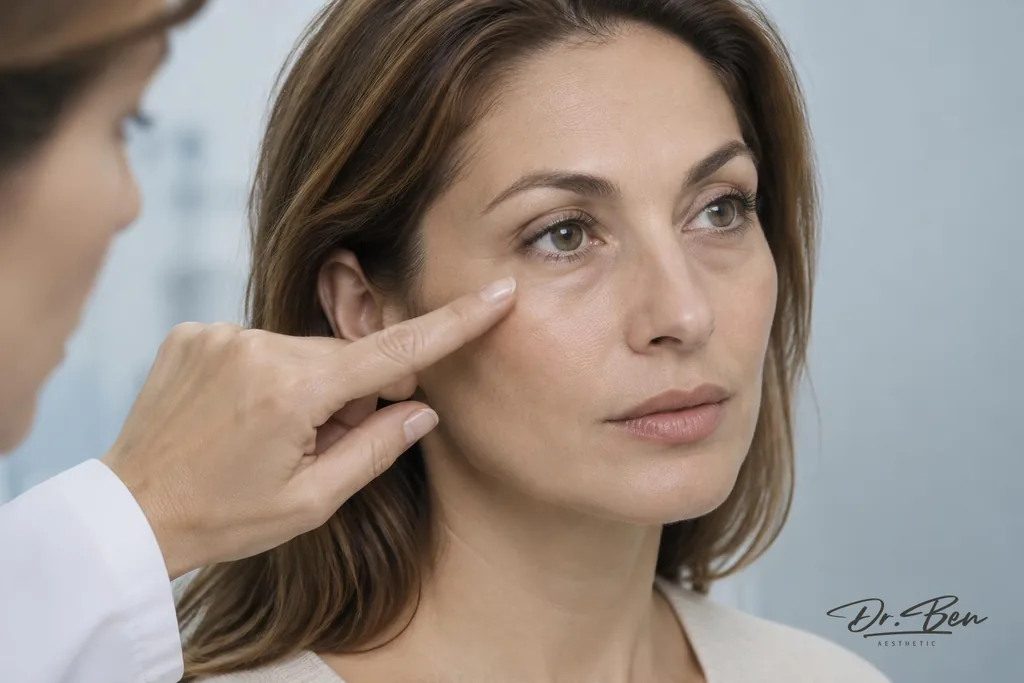
An under-eye assessment examines the lower eyelids, tear-trough region and their relationship to the upper cheeks. It considers pigmentation, skin thickness and quality, puffiness, tissue support, eyelid position and any changes following previous procedures. The aim is to understand possible contributors rather than assume that a tired appearance has a single cause or requires cosmetic treatment.
Relevant medical causes and symptoms are also considered. Allergies, inflammation, fluid retention and some health conditions may affect the area; examination may indicate that medical investigation or specialist assessment is more appropriate than an aesthetic procedure.
A cosmetic consultation and facial assessment can provide a broader view when concerns extend beyond the lower eyelids. Cheek support and facial proportions may be explored through facial contouring and volume assessment. If you have separate concerns about lip shape or symmetry, a lip consultation can be discussed without assuming that either area needs treatment.
Common Under-Eye Concerns
The concerns below can overlap. Changes in lighting, facial expression and swelling can also influence appearance. Discuss what you have noticed, when it began and whether it varies; a photograph or a descriptive label alone cannot determine the cause or the most appropriate next step.
Hollowness and the Tear Trough
The tear trough is the groove between the lower eyelid and upper cheek. Its depth and visibility are influenced by inherited anatomy, bone structure, tissue distribution and cheek support. Age-related changes may contribute, but hollowing can also be present in younger adults and is not always a sign of ageing.
Assessment distinguishes a structural hollow or shadow from pigmentation and considers whether puffiness is making the adjoining groove look deeper. Not every hollow is suitable for a volume-focused procedure, and an intervention can sometimes worsen swelling or create an uneven contour.
Dark Circles
Dark circles may reflect pigmentation, thin skin through which underlying blood vessels are more visible, or shadows produced by hollowness and adjoining tissues. Several of these factors can occur together, so a change in volume alone may not address the colour you notice.
Relevant skin irritation, allergies, rubbing and health symptoms are discussed where appropriate. A skin-quality consultation may help explore skin-related contributors, but no approach can guarantee complete removal of dark circles.
Puffy Eyes and Under-Eye Bags
Puffiness can be related to fluid retention, allergies, inflammation, previous procedures or the position of tissues and fat around the lower eyelid. Whether swelling varies through the day, affects one or both eyes, or is accompanied by pain or other symptoms helps guide assessment.
Non-surgical options do not address every cause of an under-eye bag. Adding volume may make some forms of puffiness more noticeable. Structural bags or eyelid changes may warrant specialist advice, and new or unexplained swelling may need medical assessment before cosmetic options are considered.
Fine Lines and Skin Texture
The lower eyelid has delicate skin that moves with expression. Fine lines, dryness and texture changes may relate to skin quality, sun exposure, movement and age-related tissue changes. Assessment considers skin sensitivity and any irritation as well as your cosmetic concerns.
You may have questions about skin boosters and bioremodelling or other skin-quality approaches. Discussing a category does not recommend a product or establish that it is suitable for the under-eye area. Options have different indications, limitations and risks, and some should not be used close to the eyes.
Lower Eyelid Laxity
Changes in lower eyelid support and position may affect both appearance and eye comfort. Watering, irritation, difficulty closing the eye or a change in how the lid sits against the eye are relevant symptoms to mention, not simply cosmetic details.
A cosmetic procedure may not correct an eyelid support problem and may be inappropriate. Examination findings can indicate the need for an ophthalmologist or an oculoplastic specialist rather than treatment in a cosmetic consultation setting.
Prior Cosmetic Treatment Concerns
Persistent swelling, lumps, asymmetry, a blue-grey hue or an unexpected contour after a previous procedure need individual assessment. Previous filler concerns should be reviewed before further procedures are considered; adding another treatment does not necessarily resolve the underlying problem and may make it harder to assess.
Bring available treatment records, including dates, products or techniques used and details of any complications. Not every change is caused by the previous treatment, and correction or reversal cannot be assumed to be suitable, straightforward or successful.
Why Is Under-Eye Anatomy Important?
The under-eye area lies close to the eyes and contains delicate tissues, blood vessels and nerves. Its blood-vessel connections are relevant to serious complications: some injectable procedures can compromise circulation and, rarely, affect the blood supply to structures involved in vision.
Skin thickness, eyelid support, cheek anatomy and previous procedures vary between people. Understanding these differences is important when discussing suitability, but anatomical assessment and clinician experience do not remove all risk. Procedures around the eyes require a careful, procedure-specific discussion, including the possibility of severe visual injury.
What Happens During Your Consultation?
Your consultation generally includes five stages to support an informed decision:
- Concerns and goals: discuss the changes you have noticed, their timing, any associated symptoms and what you hope to understand or address. Your preferences and the features you want to preserve are part of the conversation.
- Medical, eye and treatment history: review relevant health conditions, medicines, allergies, eye problems, previous eyelid surgery and cosmetic procedures. Share available records and details of swelling, visual symptoms or other complications.
- Facial and eyelid examination: assess the lower eyelids, tear troughs, skin, pigmentation, puffiness and cheek support, including relevant asymmetry and eyelid position. Further investigation may be needed if the cause is unclear.
- Options and alternatives: discuss findings, conservative or medical care, clinical options where appropriate, specialist referral or no treatment. Not every concern can be addressed by a cosmetic procedure, and an intervention may not be recommended.
- Risks, costs and informed consent: discuss material risks, limitations, recovery, follow-up and fees before any decision. You can ask questions, take time to consider the information or decline treatment; consent is not assumed simply because you attend a consultation.
See Fees & Pricing for consultation fees. Treatment and procedure fees are provided after individual assessment and explained before proceeding. A same-day procedure should not be assumed; further assessment or a separate appointment may be necessary.
Potential Risks and Complications
Risks vary with the procedure and your individual circumstances. Potential complications include bruising, swelling, tenderness, persistent puffiness, contour irregularities, asymmetry, infection, discolouration, scarring and tissue injury. An unsatisfactory result or a complication may require further care, and correction or reversal is not always possible.
Some injectable procedures can rarely cause vascular occlusion, meaning a blocked blood vessel, with tissue damage or severe visual injury, including permanent loss of vision or blindness. Although rare, these are serious risks that must be discussed when a relevant procedure is being considered. Procedures around the eyes are not risk-free.
Suitability depends on your examination, medical and eye history, previous procedures and the proposed approach. No procedure can guarantee removal of dark circles, a particular contour or a satisfactory result. This page provides balanced general information and does not promote a prescription medicine or establish eligibility for a treatment.
Previous Under-Eye Treatments and Persistent Concerns
Previous under-eye procedures can affect tissue appearance and the assessment of new concerns. Persistent swelling, unevenness, lumps or discolouration require examination and a review of treatment history before another intervention is discussed. The cause cannot be reliably determined from an online description alone.
Ultrasound assessment and filler dissolving may be discussed where clinically indicated. Ultrasound may help clarify some previous treatment findings if indicated and available, but it has limitations and is not required for every patient. Dissolving is not automatically suitable or available, carries its own risks and requires separate assessment and informed consent.
When to Seek Urgent or Emergency Assessment
New visual disturbance, loss of vision, sudden eye pain or other acute ocular symptoms, particularly after a procedure, require immediate emergency assessment. Call 000 or attend an emergency department; do not wait for a routine cosmetic appointment or an online response.
Severe new pain, blanching (skin turning unusually pale) or unusual skin discolouration after a recent injection also require urgent medical assessment because they may indicate impaired blood supply or tissue injury. Contact the treating clinician immediately while arranging urgent care; do not delay emergency help if eye or visual symptoms are present.
When Might Specialist Referral Be Appropriate?
Referral to an ophthalmologist or an oculoplastic specialist may be appropriate for eyelid laxity, structural bags, abnormal eyelid position, eye symptoms or concerns that may need surgery. Medical investigation may be more appropriate for unexplained swelling or other possible health-related causes.
A specialist can assess eye health and eyelid function and discuss options within their area of practice. Referral does not guarantee that surgery or another procedure will be recommended. Serious or acute symptoms need urgent care rather than a routine referral pathway.
Under-Eye Consultation Locations
Dr Ben consults at Capstone Medical Centre Southbank, 216 City Road, Southbank VIC 3006, and Cosmetic Avenue Malvern, 1308 Malvern Road, Malvern VIC 3144.
Both are independent consulting locations, not clinics owned, operated or managed by Dr Ben Aesthetic. Please confirm availability and appointment arrangements before attending.
Arrange an Under-Eye Consultation
An under-eye consultation with Dr Ben offers an opportunity to discuss your concerns, understand relevant anatomy and consider findings, risks and alternatives. It does not guarantee a cosmetic outcome or confirm that any procedure is necessary, suitable or available.
You can take time to consider the information, seek specialist advice where appropriate or choose no treatment. Booking a consultation does not commit you to a procedure. This information is general and is not a diagnosis, a treatment recommendation or a substitute for individual medical advice.
Common questions
- What causes dark circles under the eyes?
- Dark circles can reflect pigmentation, thin skin with visible underlying blood vessels, shadows from hollowness or adjoining tissues, or several factors together. Allergies, irritation and some health conditions may also contribute. Individual assessment is needed to understand likely causes rather than assume that one treatment can address them all.
- Is under-eye hollowing always caused by ageing?
- No. Inherited anatomy, bone structure, tissue distribution and cheek support can make a tear trough noticeable at a younger age. Age-related changes may contribute, but they are not the only cause. A consultation considers your individual anatomy and history before discussing options.
- Can under-eye bags be treated without surgery?
- It depends on the cause. Some puffiness may relate to fluid retention, allergies, inflammation or previous procedures and may need medical assessment. Structural bags or eyelid support problems may not be addressed by non-surgical cosmetic options and may warrant ophthalmology or oculoplastic advice. Neither a non-surgical approach nor surgery is automatically suitable.
- Are procedures around the eyes safe?
- No procedure around the eyes is risk-free. Depending on the procedure, risks include bruising, swelling, persistent puffiness, infection, contour changes, discolouration and tissue injury. Some injectable procedures can rarely cause blocked blood vessels and severe visual damage, including permanent blindness. Suitability and material risks require an individual discussion before informed consent.
- Can dark circles and hollowing be assessed together?
- Yes. They often overlap and can be assessed alongside skin quality, puffiness, eyelid position and cheek support. A hollow may cast a shadow without being the sole cause of dark circles. Discussing these concerns together does not mean that a single procedure will address both or that any procedure is appropriate.
- What if I have had previous under-eye treatment?
- Tell Dr Ben about the procedures, dates, products or techniques used and any complications, and bring available records. Persistent swelling, lumps, unevenness or discolouration need assessment before further procedures. Ultrasound may be considered where clinically indicated. New visual disturbance or acute eye symptoms require emergency assessment; severe pain, blanching or unusual skin discolouration after a recent injection require urgent medical care.
- Can treatment completely remove my dark circles?
- Complete removal cannot be guaranteed. Pigmentation, visible blood vessels, thin skin and structural shadows may contribute in different ways, and available approaches have limitations. Results vary and may not meet expectations. A consultation can explain findings and alternatives without promising a particular outcome.
- Can I have a procedure on the day of my consultation?
- A same-day procedure should not be assumed. Assessment, suitability, informed consent and applicable clinical and regulatory requirements must be addressed first. Further investigation, specialist advice, time to consider your options or a separate appointment may be needed, and a procedure may not be recommended.
- Do I have to proceed with treatment after an assessment?
- No. A consultation is an opportunity for information and assessment, not a commitment to treatment. You can ask questions, take time to consider alternatives, defer a decision or choose no procedure without pressure.
Next step
Arrange a consultation
Assessment in person is the only way to work out what is causing a skin concern and what can reasonably be done about it. Fees are explained before anything is arranged.
Medical disclaimer
This page is general information only and is not a diagnosis, a treatment recommendation, or a substitute for individual medical advice. Conditions that look similar can have different causes, and what is suitable for one person may not be suitable for another. If you are unwell, in significant pain, or worried about a rapidly changing symptom, seek medical care promptly. In an emergency call 000.
- Written for patients by
- Dr Benyamin Mansoori, cosmetic physician & skin cancer doctor
- Medically reviewed by
- Dr Benyamin Mansoori (MD, FRACGP, FACCSM), AHPRA MED0002097300
- Last medically reviewed