Medical & Previous Treatment Concerns
Filler Lumps, Swelling & Asymmetry Assessment in Melbourne
Dr Benyamin Mansoori provides doctor-led assessment of concerns after previous dermal filler in Southbank and Malvern, Melbourne. Lumps, swelling, uneven contours or worries about migration may become noticeable soon after treatment or months or years later, including when the product or treatment history is unknown.
A change in facial appearance is not always a filler complication. Natural anatomy, ageing, inflammation and unrelated skin or soft-tissue conditions can contribute. Medical evaluation comes before any corrective procedure: not every concern needs dissolving, additional filler or further cosmetic treatment.
Sudden vision changes, neurological symptoms, severe or increasing pain, or abnormal skin colour after an injection require immediate medical attention rather than a routine cosmetic appointment. Call 000 for an emergency; do not wait for a consultation through this website.
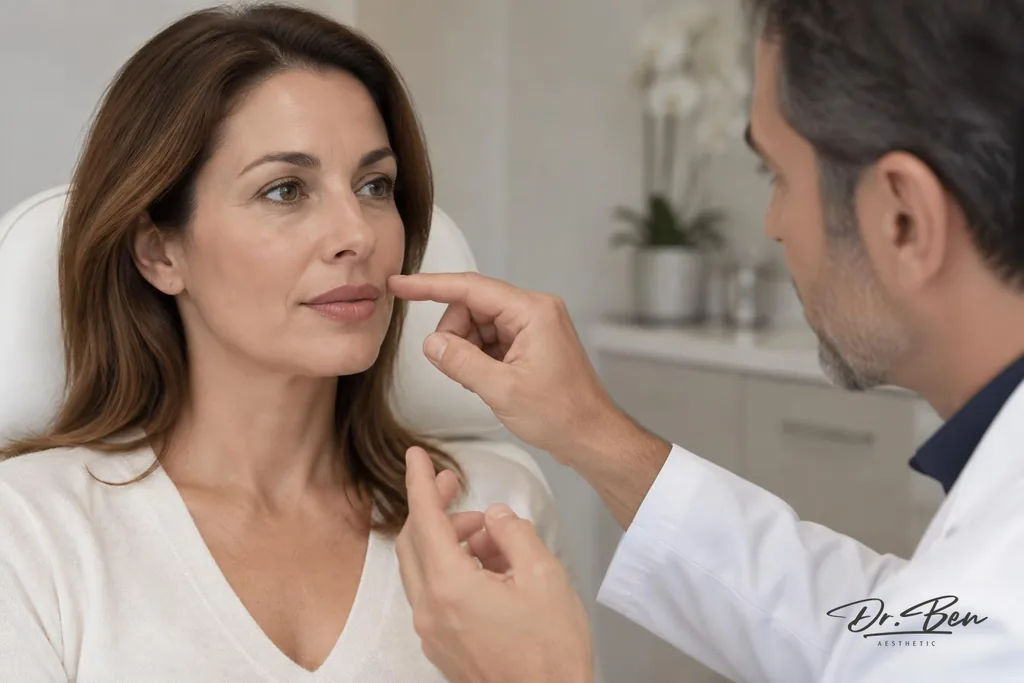
What Concerns Can Develop After Dermal Filler?
People seek assessment for palpable lumps, persistent, delayed or recurrent swelling, uneven contours, asymmetry or suspected migration. Unwanted fullness around the lips or under eyes, pain, tenderness and inflammation may also prompt review. Some people are uncertain about old or unidentified material, or disappointed with their appearance without having an acute complication.
When the change began, whether it is progressing and whether other symptoms accompany it all affect the level of clinical concern. This page focuses on symptoms and urgency; the separate Previous Dermal Filler Concerns page explains the broader consultation and planning process. A description or photograph alone cannot establish the cause of your individual concern.
What Changes Are Common Shortly After Filler Treatment?
Mild bruising, swelling and soreness can occur shortly after an injection. Their extent and duration vary with the area, procedure and individual response. Early swelling can temporarily make the two sides look different, but there is no universal timetable that proves a symptom is harmless. Follow the treating clinician’s aftercare instructions and seek review if recovery is not following the expected course.
Severe or progressive pain, blanching or mottled skin, unusual dusky discoloration, eye symptoms or neurological changes must never be dismissed as routine bruising or swelling. A symptom that is worsening rather than settling deserves reassessment. Emergency warning signs require immediate care, not waiting for the usual follow-up appointment.
What Can Cause a Lump After Dermal Filler?
A lump is a finding, not a diagnosis. Its depth, consistency, location, tenderness and development over time help guide examination and any investigations. It should not be assumed to contain filler simply because an injection previously occurred nearby.
Localised Filler Material
Material concentrated in one area, placed superficially or felt through thin tissue can sometimes contribute to a palpable or visible irregularity. Whether this explains your lump requires assessment of the original treatment and surrounding anatomy. Appearance alone does not establish the product, amount or position.
Swelling or Tissue Changes
Local swelling, healing changes or changes in surrounding tissue can feel like a lump even without a distinct deposit needing correction. Examination considers whether the finding is soft, firm, fluctuating or associated with altered skin. Observation may be appropriate for some findings, but only after concerning causes have been considered.
Inflammatory Nodules
An inflammatory response around previously injected material can produce nodules, sometimes after a delay. Tenderness, redness or recurrent swelling may be present, although not every nodule is inflammatory. The underlying cause needs evaluation before selecting medical management or a corrective intervention.
Infection
Infection can cause a painful or inflamed lump, sometimes with warmth, spreading redness, discharge or fever. These symptoms need prompt medical review. Infection and non-infectious inflammation may look similar, and cosmetic correction should not replace assessment of a possible infection.
An Unrelated Skin or Soft-Tissue Condition
A cyst, enlarged lymph node or another skin or soft-tissue condition may be unrelated to filler. A new, enlarging or unexplained lump warrants examination on its own merits. Depending on the findings, investigation or referral may be more appropriate than a filler-focused procedure.
What Is Suspected Filler Migration?
Suspected migration means concern that injected material is situated beyond its intended placement. Fullness above the lip border is one example people may notice, but a similar appearance can arise from the original placement, swelling or normal anatomical variation. A ridge or change in shape is not, by itself, proof that material has moved.
Assessment considers treatment history, previous photographs and examination rather than relying on a label from social media. Selected ultrasound imaging may help clarify the position of some material when that information would affect management, but it does not resolve every uncertainty.
Why Can Swelling Occur Months or Years Later?
Delayed swelling may relate to an immune or tissue response around previous material, inflammation, infection or changes in local fluid balance. Unrelated medical disorders can also cause facial swelling. A long interval since treatment neither confirms filler as the cause nor rules it out.
The clinician asks whether swelling is constant or episodic, how long episodes last, what areas are affected and whether pain, redness, fever or other symptoms accompany it. Examination and, where warranted, imaging or further medical investigation help guide the next step. Recurrent or unexplained swelling should be assessed rather than repeatedly treated as a cosmetic volume issue.
Can Previous Filler Cause Facial Asymmetry?
Previous filler can contribute to uneven contours, but natural differences between the two sides of the face are common. Swelling, differences in material placement, facial movement and age-related tissue changes may also affect symmetry. Comparing earlier photographs can help distinguish a new change from a pre-existing feature.
A whole-face Facial Contouring & Volume Assessment may be relevant when the concern involves proportions rather than an isolated lump. The aim is to understand contributing factors and discuss reasonable options, not to promise perfect symmetry. Adding or removing material without establishing the cause may create further imbalance.
Concerns Around the Lips and Under-Eye Region
Previous Lip Filler Concerns
Lip concerns may involve lumps, altered shape, unevenness during movement, unwanted fullness or suspected material above the border. Assessment considers the lips at rest and during expression, surrounding tissue and the original treatment history. A separate Lip Consultation can address broader appearance and anatomy questions once any medical concern has been evaluated.
Previous Under-Eye Filler Concerns
Puffiness or an irregular under-eye contour may involve previous material, fluid changes or the complex relationship between eyelid and cheek anatomy. An Under-Eye Assessment considers these possibilities rather than assuming all fullness should be dissolved. Sudden vision changes, eye pain or other acute eye symptoms after an injection require immediate emergency assessment, not a routine under-eye consultation.
Can Dermal Filler Remain in the Face for Years?
Some injected materials may persist longer than expected, and duration varies with the product, location and individual circumstances. Time passing or the return of an earlier appearance does not reliably prove that all material has disappeared. Equally, fullness years later is not proof that filler remains.
Treatment records and clinical assessment may help, with selected imaging if it is likely to answer a relevant question. Even with investigation, the exact brand or composition of old material may remain uncertain. Management needs to account for that uncertainty rather than promising that every previous injection can be located or reversed.
What If You Do Not Know Which Filler Was Injected?
If available, bring treatment dates, product names, records from the original provider, photographs before and after treatment, and details of subsequent corrections. Information about the areas treated and the onset of symptoms is useful even without a complete record. You can still seek medical assessment without knowing the product.
Obtaining records may be advisable before deciding about correction. Ultrasound can sometimes add anatomical information, but it is not universally specific for different materials and may not identify an exact product. An unknown treatment history can limit appropriate interventions and may make further investigation or specialist advice preferable.
When Are Symptoms After Filler an Emergency?
Do not use a routine consultation or online enquiry to manage an acute complication. Warning signs need immediate medical attention, even when their cause is uncertain. Do not wait for photographs to be reviewed or for the original practitioner to become available.
Sudden Vision Changes or Neurological Symptoms
Sudden blurred, double or lost vision, or neurological symptoms such as weakness, facial droop, difficulty speaking or confusion after an injection are emergencies. Call 000 immediately and tell the emergency team about the recent procedure. Do not drive yourself or wait for a routine appointment.
Severe Pain or Abnormal Skin Colour
Severe or increasing pain, white or blanched skin, mottled discoloration or dusky skin after filler may indicate compromised blood supply. These signs require immediate medical evaluation and must not be dismissed as expected bruising. If vascular injury is suspected, call 000 or seek emergency care immediately rather than waiting for a cosmetic review.
Possible Infection
Spreading redness, increasing warmth, fever, discharge or escalating tenderness may indicate infection and warrant prompt, urgent medical review. Seek emergency care if symptoms progress rapidly or you are significantly unwell; call 000 for a severe emergency. The need for urgent assessment depends on symptoms, not how long ago filler was administered.
What Happens During a Previous Filler Assessment?
Step 1: Understand Your Symptoms
The consultation begins with what you have noticed, when it started and how it has changed. Pain, swelling, skin changes and associated symptoms help establish urgency and distinguish an appearance concern from a possible medical complication.
Step 2: Review Previous Procedures and Product History
Previous injection sites, approximate dates, products if known and any corrective treatments are reviewed. Records and photographs can help, but incomplete information does not prevent an initial assessment. Important uncertainties are explained rather than filled in with assumptions.
Step 3: Medical History and Clinical Examination
Relevant medical conditions, medicines, allergies and previous reactions are discussed. Examination considers facial contour, lumps, skin colour, tenderness and surrounding anatomy, including whether a finding may have a cause unrelated to filler.
Step 4: Consider Targeted Investigations
Ultrasound, other investigation or referral is considered only when clinically indicated and likely to inform care. Not everyone needs imaging, and arrangements depend on the concern and appropriate clinical resources. Consultation does not promise a particular investigation or procedure at that site.
Step 5: Discuss Findings and Next Steps
Options may include observation, obtaining records, investigation, suitable medical management or referral. Limitations, risks, costs and consent requirements are discussed before any intervention. There is no obligation to proceed or assumption that correction should happen at the first visit.
Can Ultrasound Help Assess Previous Filler?
Ultrasound uses sound waves to create soft-tissue images. In selected circumstances it may help assess some deposits, fluid collections and vascular anatomy, particularly when the relationship of a finding to surrounding structures could change management. It supplements rather than replaces history and examination.
What can be seen depends on equipment, operator experience, product characteristics and depth. Ultrasound may not detect every deposit or identify the exact material, and an indeterminate scan is not clearance to proceed with treatment. The dedicated Ultrasound Assessment & Filler Dissolving consultation page explains the assessment approach and limitations in more detail.
Does Every Filler Concern Require Dissolving?
No. A concern may be best managed by observation, medical evaluation, investigation or referral. Some selected hyaluronic-acid materials are susceptible to an enzyme-based prescription intervention, but not all filler materials are: permanent and other non-hyaluronic-acid products cannot be assumed to respond. Whether a prescription option is appropriate is discussed privately with the clinician after assessment.
Potential risks include allergic reactions, including rare anaphylaxis, incomplete correction and unwanted changes in contour. Infection or inflammation does not automatically call for dissolving and may require a different medical approach. No intervention guarantees a return to your appearance before treatment, and uncertainty about old material may limit options.
What Management Options May Be Appropriate?
Management depends on the likely cause, severity and uncertainty of the finding, not solely on dissatisfaction with appearance. Options are individualised; a procedure or investigation must not be assumed available at either consulting location.
Observation and Follow-Up
A stable finding without concerning features may be monitored after assessment. Follow-up should include an agreed review plan and advice about changes requiring earlier care. Observation is not appropriate for an untreated emergency warning sign.
Obtaining Previous Treatment Records
Records may clarify what was injected, where it was placed and what corrections have already occurred. This can reduce uncertainty and help avoid choosing an intervention unsuitable for the material or previous history.
Further Investigation
Selected imaging or other investigations may be appropriate when a lump or swelling remains unexplained. The choice depends on the clinical question, and investigation may still leave uncertainty. Referral may be needed to arrange appropriate assessment.
Medical Management
If infection, inflammation or another medical condition is suspected, care addresses that diagnosis rather than simply changing facial volume. Any prescription treatment is considered privately through individual clinical consultation, with suitability and risks discussed. This page does not recommend a medicine.
Selected Corrective Treatment
Correction may be considered for selected findings when expected benefit, limitations and risks have been assessed. Uncertain product history or an active medical problem may make intervention inappropriate. Correction is not guaranteed to remove every irregularity or recreate an earlier appearance.
Specialist Referral
Complex, persistent or uncertain findings may require another specialist’s assessment, particularly when permanent material, significant inflammation or another diagnosis is involved. Referral is a clinical care option, not a failure of consultation.
No Further Cosmetic Treatment
Declining further cosmetic treatment can be a reasonable outcome. When there is no medical indication for intervention, or risks outweigh likely benefit, explanation and a monitoring plan may be preferable to another procedure.
What Are the Risks of Further Corrective Procedures?
Further procedures can cause pain, swelling, bruising, infection, allergic reactions, persistent nodules or inflammation. Unevenness, unwanted contour changes, tissue damage and scarring are also possible. Some injectable interventions carry rare but severe vascular or visual risks, and risk can never be eliminated completely.
Risks depend on the intervention, anatomical area, previous material and individual medical history. Assessment, consent and careful planning do not guarantee a complication-free result. Investigation, referral or no procedure may be recommended when potential harm outweighs a reasonable expected benefit.
Can You Have a Consultation Without Agreeing to Further Treatment?
Yes. You can seek an explanation, discuss investigation and referral, or understand risks without agreeing to another cosmetic procedure. Monitoring or declining intervention may be appropriate. You should have time to consider information and ask questions without pressure to proceed.
If you also want to discuss broader appearance goals, a Cosmetic Consultation & Facial Assessment can be considered separately from evaluating an acute symptom. Consultation Fees are available on the fees page; proposed investigation or procedure costs must be explained before proceeding. Consultation does not promise or require same-day treatment.
Previous Filler Concerns Consultations in Melbourne
Dr Benyamin Mansoori consults at two independent consulting sites in Melbourne. Capstone Medical Centre Southbank is at 216 City Road, Southbank VIC 3006. Cosmetic Avenue Malvern is at 1308 Malvern Road, Malvern VIC 3144. These are independent sites where he consults, not clinics described as owned by him.
Confirm appointment availability, appropriate services and any investigation arrangements with the individual site. Do not assume ultrasound or a corrective procedure is available at either location or will occur during an initial visit. Acute complications need immediate medical care rather than waiting for location-specific availability.
Arrange a Previous Filler Assessment
For a non-emergency concern about a lump, swelling or asymmetry after previous filler, medical assessment can consider likely causes and suitable next steps. These may include observation, imaging, medical care or referral rather than automatic dissolving or additional cosmetic treatment. Bring any records you have, but do not delay urgent care to obtain them.
This page is general information, not a diagnosis or individual treatment recommendation. The existing Book a Filler Assessment option is for arranging consultation, not emergency care. For acute visual or neurological symptoms or suspected vascular injury, call 000 and seek emergency medical attention immediately.
Common questions
- Is a lump after dermal filler always a complication?
- No. A lump may reflect localised material, temporary swelling, tissue changes, inflammation, infection or a condition unrelated to filler. Examination distinguishes these possibilities. A painful, changing, red or enlarging lump deserves medical review rather than assuming it is harmless or needs dissolving.
- Can filler lumps appear years after treatment?
- Delayed nodules or tissue reactions can occur after a long interval, but a new lump years later can also have an unrelated cause. Timing, progression and associated symptoms guide assessment. A previous injection in the same area does not establish a diagnosis without examination.
- How do I know if my filler has migrated?
- Fullness beyond the intended area may raise the question, but appearance alone is not definitive. Original placement, anatomy or swelling can look similar. Assessment reviews your history and examines the area, with selected imaging only if it would help clarify management.
- Is swelling after filler always normal?
- No. Mild early swelling can be part of recovery, but persistent, delayed, recurrent or progressive swelling warrants review. Increasing pain, abnormal skin colour, spreading redness, fever or eye symptoms should not be treated as routine recovery. Emergency warning signs need immediate care rather than waiting for swelling to settle.
- Can old filler remain in my face?
- Some materials can persist longer than expected, although duration varies and fullness is not proof that filler remains. Records, examination and occasionally selected imaging may help. Neither time alone nor a scan necessarily identifies every deposit or the exact old product.
- What if I do not know which filler I received?
- You can have an initial consultation without complete records. Bring approximate dates, photographs and details of the provider or corrections if available. Records may help later decisions, while ultrasound may offer anatomical information without reliably identifying the exact material. Uncertainty can limit safe corrective options.
- Do I need ultrasound for every filler concern?
- No. Ultrasound is considered when clinically relevant and likely to answer a useful question. Many concerns begin with history and examination. Imaging may not detect all material or identify a product; an inconclusive result does not establish that further treatment is safe.
- Does every filler lump need dissolving?
- No. Observation, medical evaluation, further investigation or specialist referral may be more appropriate, depending on the cause. Infection, inflammation and unrelated lumps need their own assessment. Dissolving is not an automatic response and cannot be assumed suitable when injected material is unknown.
- Can all types of filler be dissolved?
- No. Some selected hyaluronic-acid materials may respond to an enzyme-based prescription intervention, but permanent and other non-hyaluronic-acid materials cannot be assumed to do so. Suitability, risks and uncertainty are discussed privately after assessment. Complete reversal or restoration of your previous appearance cannot be promised.
- What filler symptoms require immediate emergency care?
- Sudden vision changes, neurological symptoms or suspected vascular injury require immediate emergency attention: call 000. Severe or increasing pain, blanching, mottled or dusky skin after an injection can indicate impaired blood supply. Do not wait for a routine consultation, online response or the original practitioner to become available.
- Can filler dissolving cause an allergic reaction?
- Yes. Allergic reactions can occur, including rare anaphylaxis, which is a medical emergency. Allergy history and risks need discussion before informed consent. Assessment and precautions do not eliminate every risk, and incomplete correction or unwanted contour changes are also possible.
- Will I need a corrective procedure at my first consultation?
- No. The first consultation is for assessment and discussion, not a commitment to a procedure. Records, investigation, monitoring or referral may be recommended before considering correction. There is no obligation to proceed and no promise of same-day treatment or a particular outcome.
Next step
Arrange a consultation
Assessment in person is the only way to work out what is causing a skin concern and what can reasonably be done about it. Fees are explained before anything is arranged.
Medical disclaimer
This page is general information only and is not a diagnosis, a treatment recommendation, or a substitute for individual medical advice. Conditions that look similar can have different causes, and what is suitable for one person may not be suitable for another. If you are unwell, in significant pain, or worried about a rapidly changing symptom, seek medical care promptly. In an emergency call 000.
- Written for patients by
- Dr Benyamin Mansoori, cosmetic physician & skin cancer doctor
- Medically reviewed by
- Dr Benyamin Mansoori (MD, FRACGP, FACCSM), AHPRA MED0002097300
- Last medically reviewed