Concerns
Hair Thinning & Excessive Hair Shedding Assessment in Melbourne
Dr Benyamin Mansoori provides doctor-led assessment of hair, scalp and shedding concerns while consulting in Southbank and Malvern, Melbourne. You may notice more hair in the shower, a receding hairline, a widening part or a gradual reduction in density. Understanding the pattern and timing is important before choosing management.
Gradual androgenetic alopecia differs from abrupt shedding such as telogen effluvium, which may follow illness, childbirth or weight loss. Iron deficiency, thyroid disorders, medicines and inflammatory or autoimmune scalp disease are other possible contributors. More than one cause can be present.
A consultation aims to establish the likely diagnosis and explain appropriate next steps. It is not a commitment to a procedure, there is no universal solution and regrowth cannot be guaranteed.
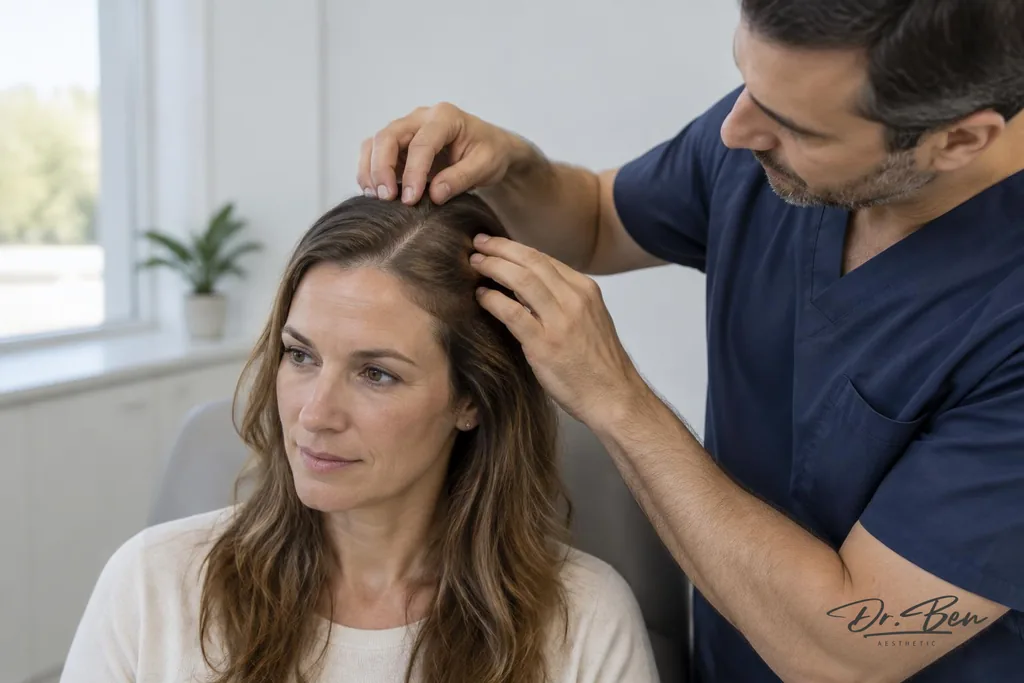
What Is the Difference Between Hair Thinning and Hair Shedding?
Hair Thinning
Hair thinning describes a reduction in visible density or the thickness of individual hairs. In pattern hair loss, some follicles progressively produce finer, shorter hairs through miniaturisation. A wider part or more visible scalp may develop gradually, even without a noticeable increase in hairs falling out.
Hair Shedding
Hair shedding is the release of hairs as follicles move through their growth cycle. Some shedding occurs normally every day, but a sudden or sustained increase beyond your usual pattern can signal a change in cycling. Shedding is different from hair-shaft breakage, which may leave short, broken hairs rather than hairs released from the root.
Can Both Occur Together?
Yes. Someone with gradual pattern hair loss may also experience an episode of telogen effluvium after illness or another trigger. Assessment considers both density and shedding rather than assuming that one diagnosis explains every change. The Hair-Loss Consultation page describes the broader assessment process.
How Much Hair Shedding Is Normal?
Normal hair cycling includes growth, transition and resting phases, followed by release and replacement. The amount you notice varies with hair length, washing frequency, brushing and styling. Hairs collected over several days may appear together when you wash your hair, so a single shower is not a reliable diagnostic measure.
A change from your own baseline is usually more useful than trying to meet a strict daily hair count. Notice whether increased shedding persists, your part is widening, your ponytail feels smaller or your scalp has become uncomfortable. Photos taken in comparable lighting can help document change without repeatedly counting individual hairs.
What Causes Hair Thinning or Excessive Shedding?
Androgenetic Alopecia
Inherited susceptibility and follicular sensitivity to androgens can lead to progressive miniaturisation. This can affect people of any sex, with different patterns and rates of progression. Family history can be informative, but its absence does not exclude pattern hair loss.
Telogen Effluvium
Illness, significant physiological or emotional stress, childbirth and substantial weight change can shift more follicles into the resting phase. Increased shedding is often delayed rather than occurring at the moment of the trigger. An identifiable trigger is not always found, and other causes can coexist.
Iron and Nutritional Deficiency
Iron deficiency, inadequate protein intake or selected nutritional deficiencies may contribute in some patients. Investigation depends on dietary restriction, blood loss, recent weight change and other clinical clues. Iron should not be taken automatically for hair loss: unnecessary supplementation can cause harm and may delay identifying the real cause.
Thyroid and Other Medical Disorders
Thyroid disease and some other medical conditions can affect the hair cycle. Associated symptoms and medical history help determine whether focused testing is appropriate. Hair shedding alone does not establish a thyroid or systemic diagnosis.
Hormonal Changes
Pregnancy, the postpartum period and menopause can influence hair cycling or reveal an underlying tendency to thinning. Symptoms such as irregular periods or other signs of hormonal disturbance may justify further evaluation. Endocrinology referral is considered when clinically indicated, not routinely for every patient.
Medications and Treatments
Some medicines and medical treatments can change growth or shedding. Timing, dose changes and the condition being treated all matter when assessing a possible link. Do not stop a prescribed medicine yourself; discuss concerns with the prescribing clinician so that benefits, risks and alternatives can be reviewed safely.
Scalp Inflammation and Infection
Inflammatory scalp disease, fungal infection and other scalp disorders may cause shedding, breakage or localised loss. Redness, scaling, pustules, crusting or tenderness warrant examination rather than relying on a cosmetic hair product. Management depends on identifying the condition.
Autoimmune Conditions
Alopecia areata can cause discrete patches of loss and sometimes more extensive involvement, including eyebrows or eyelashes. Other immune-mediated conditions may damage follicles through inflammation. Several causes can be present together, so the pattern needs clinical interpretation.
Common Patterns of Hair Loss
Receding Hairline
Gradual recession at the temples may reflect pattern hair loss, but tight hairstyles, traction and inflammatory disorders can also affect the hairline. Broken hairs, scalp symptoms and the distribution of change help distinguish these possibilities.
Widening Hair Part
An increasingly visible central part may occur with female-pattern hair loss. Diffuse shedding and other disorders can produce a similar appearance, so a widening part is a symptom rather than a diagnosis. Comparison with earlier photographs may help clarify progression.
Crown Thinning
Reduced density over the crown can develop gradually, sometimes before a person notices it themselves. The rest of the scalp, the hairline and individual hair shafts are examined as part of assessment. A crown pattern does not rule out an additional shedding episode.
Diffuse Hair Shedding
Shedding across much of the scalp may follow a hair-cycle disturbance or reflect a medical contributor. Sudden Hair Shedding information explains this presentation in more detail. A careful timeline is more useful than assuming that diffuse loss is always stress-related.
Patchy Hair Loss
Distinct patches can have autoimmune, infectious, traction-related or inflammatory causes. Rapidly developing patches should be assessed promptly, particularly if there is scaling, pain or broken hairs. Examination may lead to targeted investigations or referral.
Hair Loss with Scalp Changes
Redness, scaling, soreness or pustules alongside hair loss need medical attention. These changes can indicate a scalp condition requiring specific care and should not be concealed or treated indefinitely with over-the-counter products. Painful or rapidly worsening inflammation warrants prompt review.
What Is Telogen Effluvium?
Telogen effluvium occurs when more follicles than usual enter the resting, or telogen, phase and later release their hairs. Shedding often becomes noticeable approximately two to three months after a trigger, although timing varies. Fever, illness, surgery, childbirth, restrictive diets, major weight change and certain medicines are possible contributors.
Shedding may improve over subsequent months as cycling settles and a relevant trigger resolves. This is not a guarantee of complete recovery or a reason to ignore ongoing symptoms. Persistent or recurrent shedding can be chronic, and pattern hair loss or another medical cause may also be present. The diagnosis is considered alongside the examination and history.
Hair Loss in Men and Women
Male-Pattern Hair Loss
Gradual temporal recession or crown thinning commonly brings men to assessment. Male-Pattern Hair Loss information covers this diagnosis and its assessment separately. Sudden shedding, patchy loss or scalp inflammation should not be attributed to a typical male pattern without review.
Female-Pattern Hair Loss
Women may notice a widening central part or reduced density across the upper scalp, often with relative preservation of the frontal hairline. Female Hair Loss assessment also considers shedding, nutritional or medical contributors and scalp disease. Not every change in a woman is androgenetic alopecia.
Why Individual Assessment Matters
Sex and age alone cannot establish the diagnosis or determine suitable management. Family history, symptom timing, scalp findings, pregnancy or breastfeeding and other medical factors influence decisions. Assessment is personalised rather than applying a standard treatment to everyone with a similar appearance.
Can Hair Loss Occur After Illness, Stress or Weight Loss?
Yes. Significant physiological events or sustained stress can disturb hair cycling, and substantial weight loss may also involve inadequate energy or nutrient intake. Increased shedding may appear weeks to months later, making the connection less obvious. Recovery depends on the trigger, nutritional status and any other underlying conditions.
It is important not to assume that every episode is caused by stress. A clinician may also consider medicines, thyroid symptoms, iron deficiency, scalp disease or pre-existing pattern loss. Restrictive diets and indiscriminate supplements are not a reliable solution; medical and nutritional advice should be guided by your circumstances.
What Causes Hair Loss After Pregnancy?
Hormonal changes during pregnancy can keep more hairs in the growth phase. After birth, a greater number may move into the resting phase and shed later, producing noticeable postpartum shedding. This often settles over time, but the degree and duration vary and pre-existing thinning may become more apparent.
Severe, persistent or atypical loss deserves assessment rather than reassurance alone. Blood loss, nutritional intake, thyroid disease and other contributors may need consideration. Any medicine discussed during pregnancy or breastfeeding requires an individual safety assessment; do not start a hair-growth treatment on the assumption that it is suitable in these circumstances.
When Is Hair Loss More Concerning?
Arrange timely assessment for rapidly developing patches, a marked diffuse change, eyebrow or eyelash loss, or scalp tenderness, burning, redness, pustules or crusting. Infection, autoimmune disease and inflammatory disorders may require different care from gradual pattern thinning. Waiting for cosmetic products to work can delay appropriate investigation.
Possible Scarring Alopecia
Loss of visible follicular openings, inflammation around follicles, persistent scale, pain or burning may suggest a scarring process, although these findings require clinical interpretation. Follicles damaged by scarring may not regrow hair. Prompt medical assessment and referral to a dermatologist are important when scarring alopecia is suspected.
Severe Scalp Inflammation
Pain, discharge, fever or rapidly worsening inflammation warrant prompt medical care. A tender, swollen or infected-looking scalp should not wait for a routine cosmetic appointment. Seek emergency care if you are seriously unwell; call 000 in an emergency.
What Happens During a Hair Thinning Consultation?
Step 1: Understand Your Symptoms
Dr Ben asks when the change began, whether it is gradual or sudden, and what you notice during washing, styling or daily activities. Previous photographs and a description of your usual density can help establish a timeline. Your concerns and priorities are part of the assessment.
Step 2: Review Relevant History
The discussion covers medicines, nutrition, recent illness or surgery, weight changes, family history and relevant hormonal events. Other symptoms and previous hair treatments are reviewed. Bring available records or a medicine list rather than stopping any treatment before the appointment.
Step 3: Examine the Hair and Scalp
Examination considers density, distribution, hairline, shaft changes and signs of breakage or scalp disease. Redness, scale, tenderness and follicular openings can provide important clues. Findings are interpreted with your history, not in isolation.
Step 4: Consider Focused Investigations
Trichoscopy, selected blood tests or referral may be considered when they could clarify the diagnosis. These are not automatic parts of every appointment, and further investigation may need separate arrangements. The reason, limitations and practical details are explained before proceeding.
Step 5: Discuss a Personalised Plan
Depending on the findings, options may include correcting an underlying cause, medical management, monitoring or specialist referral. Hair-Loss Treatment Planning explains how diagnosis informs longer-term decisions. Risks, uncertainties, alternatives and relevant costs should be discussed, and there is no obligation to agree to treatment.
What Is Trichoscopy?
Trichoscopy is a non-invasive magnified examination of the scalp and hair. It can reveal variation in shaft thickness, follicular openings, features of miniaturisation and signs of inflammation that are less apparent to the unaided eye. Scalp Assessment & Trichoscopy information describes its role in a clinical evaluation.
The findings support assessment but do not always establish a diagnosis on their own. The history, distribution of loss and other examination findings remain important. Selected cases may require further tests, scalp biopsy or specialist review; do not assume every consultation includes trichoscopy or a biopsy.
What Blood Tests May Be Considered for Hair Loss?
Testing is guided by symptoms, examination, medical history and nutritional risk rather than a universal panel. Medical Investigations for Hair Loss explains the purpose of focused investigation. A result needs clinical interpretation and may identify a contributor without explaining every aspect of the hair change.
Full Blood Count
A full blood count may be considered where anaemia or another blood-related concern is possible. Symptoms such as fatigue, a history of blood loss or dietary risk can inform the decision. A normal result does not exclude every cause of shedding.
Iron Studies
Iron studies, including ferritin where appropriate, may help assess iron status. Ferritin can be influenced by inflammation and is interpreted with other findings rather than a single hair-growth target. Supplementation is considered for a demonstrated need and its cause, not simply because hair is shedding.
Thyroid Function
Thyroid tests may be useful when symptoms, history or the pattern of loss raise a concern. They are not a diagnosis in themselves and must be interpreted clinically. Further assessment or treatment depends on the findings.
Selected Nutritional Investigations
Specific nutritional tests may be considered for restrictive diets, malabsorption or other risk factors. Broad testing and high-dose supplements without a reason are not routinely helpful. Some supplements can interfere with laboratory tests, so tell your clinician what you take.
Hormonal Investigations
Hormonal testing is reserved for relevant clinical features, such as menstrual changes or other signs of endocrine disturbance. It is not routinely required for everyone with thinning. Indiscriminate hormone treatment or supplementation is not advised.
Is Hair Loss Always Reversible?
No. Telogen effluvium may improve when a trigger resolves, but duration and recovery differ between individuals. Pattern hair loss can progress, and appropriate management may aim to slow change or maintain density rather than restore all previous hair. Response cannot be predicted from appearance alone.
Scarring disorders can permanently damage follicles, which is why early recognition matters. Other factors, including duration, coexisting causes and medical suitability, influence what is realistic. A diagnosis helps set expectations without promising regrowth or implying that every type of loss has the same solution.
What Management Options May Be Discussed?
Managing Underlying Medical Conditions
When a nutritional, endocrine or other medical contributor is identified, addressing it may be part of the plan. Treatment should match a demonstrated need and may involve your usual doctor or another specialist. Correcting a contributor does not guarantee that all thinning will reverse.
Hair and Scalp Care
Reducing traction, limiting damaging practices and managing inflammatory scalp disease may help protect remaining hair. Advice depends on the condition and your routine. Gentle care does not replace investigation when symptoms suggest infection or a scarring disorder.
Medical Hair-Loss Treatment
Medical options are discussed privately according to the diagnosis, health history, pregnancy or breastfeeding considerations and individual suitability. Potential benefits, side effects and ongoing requirements need explanation. No medicine is universally appropriate, and this page does not recommend a prescription product.
Monitoring
Consistent photographs and planned review can help distinguish stabilisation from progression. Monitoring may be appropriate when symptoms are settling or when you choose not to begin treatment. A clear plan should explain when to return sooner if symptoms change.
Regenerative or Procedural Consultations
Selected patients may ask about PRP, PRF or CGF-related procedures. Evidence and protocols vary, particularly for some regenerative approaches, and benefit is uncertain rather than automatic. These approaches are not replacements for diagnosis or correction of an underlying medical problem; suitability, risks, availability and costs require separate confirmation.
Specialist Referral
Referral to a dermatologist or another appropriate specialist may be necessary for suspected scarring alopecia, complex inflammatory disease or an uncertain diagnosis. Hair Loss Assessment & Treatment provides broader information about assessment pathways. A procedure is not compulsory, and referral or no intervention may be the most appropriate outcome.
Can Hair Products and Supplements Restore Hair Growth?
Shampoos, fibres and styling products may change the appearance or manageability of hair without treating a medical cause of loss. Marketing claims do not establish that a product will reverse miniaturisation, inflammation or an underlying disorder. Persistent shedding or scalp symptoms need assessment rather than repeated product trials.
Supplementation can be relevant when a deficiency is established, but taking more than needed is not a reliable way to stimulate growth. High-dose or combined supplements can be harmful and some interfere with blood tests. Discuss products you use with your clinician, particularly if you have medical conditions or take other medicines.
What Results Should Patients Realistically Expect?
Hair cycling is slow, so meaningful change may take months to assess. Early review may focus on tolerability, reduced shedding or stabilisation rather than visible regrowth. Some conditions require ongoing management, while others improve after a temporary trigger resolves.
Response can be limited, and permanent follicular damage may prevent regrowth in affected areas. No approach guarantees complete restoration of previous density. Decisions should reflect the diagnosis, evidence, likely maintenance requirements, risks and your preferences, including the option not to proceed.
Hair Thinning & Shedding Consultations in Melbourne
Dr Benyamin Mansoori consults at Capstone Medical Centre Southbank, 216 City Road, Southbank VIC 3006, and Cosmetic Avenue Malvern, 1308 Malvern Road, Malvern VIC 3144. These are independent businesses and are not owned by Dr Ben Aesthetic. Dr Ben is responsible for the consultations he provides, not every service offered at either site.
Confirm hair-specific assessment availability, appointment arrangements and any proposed investigation at the individual location before attending. Not every test or treatment is available at both sites. Consultation Fees are described separately; any investigation or treatment costs should be explained before you agree to proceed.
Arrange a Hair Thinning & Shedding Assessment
A receding hairline, wider part, increased shedding, reduced density or new scalp symptoms can be reasons to seek medical advice. Assessment aims to establish the likely cause and discuss appropriate alternatives, which may include observation, medical care, investigation or referral. It does not automatically lead to a procedure or guarantee regrowth.
This information is general education, not a diagnosis or an individual treatment recommendation. Sudden patches, possible scarring features or painful scalp inflammation need timely medical review rather than waiting for a routine cosmetic appointment. If you are seriously unwell, seek urgent care; call 000 in an emergency.
Common questions
- What is the difference between hair thinning and hair shedding?
- Thinning means reduced density or finer hairs, while shedding is the release of hairs during the growth cycle. Increased shedding can occur without obvious thinning initially, and the two can coexist. The pattern, timing and scalp examination help distinguish likely causes rather than relying on a shower hair count.
- Is it normal to lose hair every day?
- Yes. Hairs are normally released as follicles cycle, and what you notice varies with washing, hair length and styling. A sustained change from your usual pattern, visible loss of density or scalp symptoms is more informative than a strict daily number and can justify assessment.
- What causes sudden excessive hair shedding?
- Telogen effluvium can follow illness, childbirth, surgery, significant stress or weight change, often with a delay of several months. Medicines, nutritional or thyroid problems and scalp disorders are other possibilities. Sudden shedding should not automatically be labelled stress-related, particularly if it persists or occurs with other symptoms.
- Can iron deficiency cause hair loss?
- Iron deficiency may contribute to shedding in some patients, but it is not the explanation for every case. Testing depends on risks such as blood loss or dietary restriction and results need clinical interpretation. Do not start iron automatically; unnecessary supplementation can be harmful and an identified deficiency also requires assessment of its cause.
- Can thyroid disease cause hair thinning?
- Thyroid disorders can affect hair cycling and cause thinning or shedding. Other symptoms and your history help determine whether thyroid testing is appropriate. Hair changes alone do not diagnose thyroid disease, and management depends on a clinically interpreted assessment.
- Does stress cause hair loss?
- Significant emotional or physiological stress can contribute to a hair-cycle disturbance, with shedding appearing later. However, stress is not the cause of all hair loss and other conditions may coexist. Persistent loss, patches or scalp inflammation should be assessed rather than attributed to stress without examination.
- Can hair loss after pregnancy be temporary?
- Yes. Postpartum hair-cycle changes often cause temporary shedding that settles over time. Recovery varies, and severe, prolonged or unusual loss may require assessment for iron deficiency, thyroid disease or another cause. Treatment suitability during breastfeeding must be discussed individually.
- What is telogen effluvium?
- It is increased shedding after more hairs than usual move into the resting phase. A trigger may precede the shedding by approximately two to three months, but timing varies and a trigger is not always identified. It can improve over months, persist or coexist with pattern hair loss, so recovery is not guaranteed.
- What is trichoscopy used for?
- Trichoscopy provides a magnified view of hair shafts and the scalp to assess features such as shaft variation, follicular openings and inflammation. It supports diagnosis alongside your history and examination but cannot resolve every case. Selected patients may need additional investigations or specialist review.
- Do I need blood tests for hair loss?
- Not necessarily. Tests are chosen when history, symptoms or examination suggest a medical or nutritional contributor and the result could guide care. They may include blood count, iron studies or thyroid function in appropriate circumstances. Broad panels, supplements and hormonal investigations are not routine for everyone.
- Can lost hair grow back?
- Regrowth depends on the cause and whether follicles remain capable of producing hair. Some temporary shedding improves, while pattern loss may need ongoing management and scarring damage may be permanent. No treatment can promise complete regrowth, and assessment helps set realistic expectations.
- Should I try hair-growth treatment before seeing a doctor?
- Establishing the likely cause is preferable to choosing a treatment solely from advertising or appearance. Prompt assessment is especially important for sudden patches, scalp pain, inflammation or suspected scarring. Do not start prescription treatment or high-dose supplements without appropriate advice, and do not stop existing prescribed medicines on your own.
Next step
Arrange a consultation
Assessment in person is the only way to work out what is causing a skin concern and what can reasonably be done about it. Fees are explained before anything is arranged.
Medical disclaimer
This page is general information only and is not a diagnosis, a treatment recommendation, or a substitute for individual medical advice. Conditions that look similar can have different causes, and what is suitable for one person may not be suitable for another. If you are unwell, in significant pain, or worried about a rapidly changing symptom, seek medical care promptly. In an emergency call 000.
- Written for patients by
- Dr Benyamin Mansoori, cosmetic physician & skin cancer doctor
- Medically reviewed by
- Dr Benyamin Mansoori (MD, FRACGP, FACCSM), AHPRA MED0002097300
- Last medically reviewed